Sunday, September 21, 2008

The Founding Hierarch of the OCA on the Western Rite

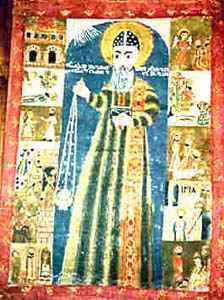
Abp. Platon (Rozhdestvensky), founding hierarch of the OCA.

As many of my readers know, earlier this month the Orthodox Chuch in America (OCA) announced the retirement of Met. HERMAN, with Abp. DMITRI of Dallas acting as locum tenens (assisted by Abp. SERAPHIM). On 9/11, they reported a new Metropolitan will be elected at the upcoming All-American Council in Pittsburgh this November.

As I noted in response to a question from a reader of this blog, the OCA presently has no Western Rite parishes. One knowledgeable source told me the OCA had given a definite (official or unofficial?) no to the idea quite a few years ago. At a minimum, there are some within the jurisdiction who oppose the idea. This is not only at odds with its history within Russian Orthodoxy, but (if true) it is at odds with its own history.

Archbishop Platon (Rozhdestvensky), the founding hierarch of the Metropolia (now the OCA), weighed in on the issue in a different way. Speaking to an Episcopalian audience, he told the group he longed to see a Western Orthodox Church in North America. Although his much later attempts to acquire ROCOR property via lawsuit (and other actions) made him an anti-hero, I present his words here for the benefit of those in the OCA who remain virulently opposed to the Western Rite — and those who would prefer the OCA have a Western Rite like that of the Antiochian Western Rite Vicariate. And this statement has significance for all North American Orthodox (see below). He spoke to the Church House in Philadelphia on February 27, 1911:
As long ago as 1904, the Committee of the Holy Synod for the furtherance of the question of Church Union published its Notes on the American Book of Common Prayer. These Notes may be taken as the Russian Orthodox view of your "wedding garment."

I do not know whether you are acquainted with these Notes. If so, you must certainly know how friendly and sincere is our feeling toward you; you must know what is our view of your "wedding garment," and how eagerly we wish they were not only like ours, but the same as ours; and yet that, at the same time, it should be becoming to your own Christian features.

How I wish that, at this moment, you not only understood me, but that your souls might be close to me. How I wish that we were sheep of the same Orthodox fold, and that it were impossible to apply to us the words oves non audiunt vocem alienorum.

My brethren in Christ, our life is moved by ideas, and not by exterior circumstances and interests, which also include both our national and our individual peculiarities. So our nearness will be realized only when our religious ideas are not only not alien, but are near and akin.

What is most important of all! Christ said: "If ye continue in my word...ye shall know the truth" (John viii, 31-32). In this rests the substance of our faith, and the substance of the question of the Union of the Churches. I find more religious significance in my Church, while you find more in yours. Why is this so? Because in my Church I want to pray, finding there alone the familiar conditions which best correspond to my mood of prayer. Why is this? For the reason that a Russian church is one thing, while an American church is another. You sit in your churches; we stand in ours. And in order to bring about union, it is not necessary to carry the pews from your Church to ours, forcing you to stand and us to sit. We shall not sit, and you, from lack of habit, could not remain standing through such long services as ours.

But Union does not demand this. Otherwise the pews might become the barrier over which the Orthodox could not step into your Church, or you into ours.

...It would be difficult to bring about a union which would enable you and ourselves to feel at home in each others' churches. It would be hard for you to transform yourselves into Russian Orthodox, and for the Orthodox to become Episcopalians.

But is this necessary? If until the eleventh century there existed an Orthodox Eastern Church and an Orthodox Western Church, why should this be impossible now, in our day?

Could we not think of the parallel existence of the two Churches, the Russian Orthodox and the Episcopal, if the former proclaims the latter its beloved sister, whose faith conforms to its own? This can take place, when your Church removes all the dogmatical differences separating it from the Orthodox Church, which has preserved pure, primitive Christianity. Until this happens, though I have friends among your Bishops whom I value highly and for whom I have a profound respect, as a faithful son of my Church, knowing its dogmas and devoted to its ritual with my whole soul, I cannot admit of any compromises which would entail the smallest and seemingly most insignificant belittling of our Orthodoxy. I am sure you yourselves could not wish this.

You will illumine your dogmatical digressions by the light of the science of history, and will see for yourselves what is to be done. When we agree concerning dogmas, there will be no need to speak of rites. They will not prevent us from being one in Christ and having the same belief in Christ. Only the more so, because both among you and among us there are many people who wish to do so.

...You already have an army ready and able to demolish the fortress of disagreement, the division which rends the seamless cloak of the Church of Christ. But this army still needs a fuller knowledge of the breadth and power of the Church of Christ in that epoch when it was not divided into factions. In my eyes, gentlemen, if you really possessed this knowledge, without any doubt you would have confessed in the face of all the world, with one mind and voice, that our Orthodox Eastern Church is the Church founded on earth by our Lord Jesus Christ "for us, men, and for our salvation." It is also beyond doubt that in that case you would have expressed the desire to be members of the Orthodox Western American Church.

May the Lord God grant to us the possibility to see the blessed day when we can give to you, Americans, the same name of Orthodox Christians. That would be a great mercy from God both for ourselves and for you. Let us believe that it will come, and let us pray that it may come soon. (Emphases added above.)

So, the founding hierarch of the OCA, Abp. Platon, prayed for the establishment of a Western Rite; he demanded only that the Episcopalians whom he addressed "remove all dogmatical differences separating it from the Orthodox Church" and modify their liturgy according to the Notes on the American Book of Common Prayer. (This has been accomplished in the Liturgy of St. Tikhon celebrated by some in the Antiochian Western Rite Vicariate.) In this, he is in line with St. Tikhon (Bellavin), St. Nicholas of Japan, St. Raphael of Brooklyn, and others. (Indeed, it appears St. Nicholas of Japan viewed the external rite of ordination as "valid" and merely opposed confused Anglican theology.) Note also Abp. Platon's allusion to the "parallel existence of two churches," meaning when these Western Christians accepted the full Orthodox faith and made necessary changes to their liturgical practice, they would retain their own Western Rite hierarchy.

To those outside the OCA, I note his words were spoken in 1911, during his first term in America, before the Bolshevik Revolution and 15 years before the split of the Metropolia and ROCOR. (In between, he had served as a member of the Holy Synod of Russia.) As such, his words were those of a bishop representing North American Orthodox regardless of later jurisdictional identity.

Now that the OCA is making other needed changes, it is time to follow the example of the 20th century saints listed above, as well as the founding hierarch of their own jurisdiction, and allow for a Western Rite like that already approved by her sister jurisdictions.

Labels: , , ,

Tuesday, August 26, 2008

Pelosi's Patristics

Raise Your Hand if You're a Bad Catholic

(And before I get hate mail, Hitler was a nominal member of the Roman Catholic Church to his death, although he was a practicing pagan and Occultist.)

Forgive the "political" post, but a politician stepped into our territory. Our fearless Speaker of the House, Nancy Pelosi, claimed on Meet the Press that Christianity has no clear teaching on when life begins, and hence on abortion, and St. Augustine denied life began until the end of the first trimester. Tom Brokaw asked her what she would tell Barack Obama if he asked her when human life has its genesis:
I would say that as an ardent, practicing Catholic, this is an issue that I have studied for a long time. And what I know is, over the centuries, the doctors of the church have not been able to make that definition. And Senator--St. Augustine said at three months. We don't know. The point is, is that it shouldn't have an impact on the woman's right to choose...over the history of the church, this is an issue of controversy.
She went on to say Christianity has believed life began at conception for "like maybe 50 years or something like that." You can see the disgusting display here.

If she has studied this issue "for a long time," she would have known the Church Fathers had an unbroken teaching on this subject for 2,000 years. Yes, it is true that St. Augustine of Hippo made a distinction between a child before its "quickening" (the time it began to move) and afterwards; so, too, did Roman Catholic theologian Thomas Aquinas, who is always cited in these arguments. However, none believed abortion before that time was blameless (!). More importantly, there was a long tradition in the Church that corrected these unrepresentative views, going back to the earliest days of Christianity:

The Didache

"The second commandment of the teaching: You shall not murder. You shall not commit adultery. You shall not seduce boys. You shall not commit fornication. You shall not steal. You shall not practice magic. You shall not use potions. You shall not procure [an] abortion, nor destroy a newborn child" (Didache 2:1–2 [A.D. 70]).

The Letter of Barnabas

"The way of light, then, is as follows. If anyone desires to travel to the appointed place, he must be zealous in his works. The knowledge, therefore, which is given to us for the purpose of walking in this way, is the following...Thou shalt not slay the child by procuring abortion; nor, again, shalt thou destroy it after it is born" (Letter of Barnabas 19 [A.D. 74]).

The Apocalypse of Peter

"And near that place I saw another strait place...and there sat women...And over against them many children who were born to them out of due time sat crying. And there came forth from them rays of fire and smote the women in the eyes. And these were the accursed who conceived and caused abortion" (The Apocalypse of Peter 25 [A.D. 137]).

Athenagoras

"What man of sound mind, therefore, will affirm, while such is our character, that we are murderers?...[W]hen we say that those women who use drugs to bring on abortion commit murder, and will have to give an account to God for the abortion, on what principle should we commit murder? For it does not belong to the same person to regard the very fetus in the womb as a created being, and therefore an object of God’s care, and when it has passed into life, to kill it; and not to expose an infant, because those who expose them are chargeable with child-murder, and on the other hand, when it has been reared to destroy it" (A Plea for the Christians 35 [A.D. 177]).

Tertullian

"In our case, a murder being once for all forbidden, we may not destroy even the fetus in the womb, while as yet the human being derives blood from the other parts of the body for its sustenance. To hinder a birth is merely a speedier man-killing; nor does it matter whether you take away a life that is born, or destroy one that is coming to birth. That is a man which is going to be one; you have the fruit already in its seed" (Apology 9:8 [A.D. 197]).

"Among surgeons’ tools there is a certain instrument, which is formed with a nicely-adjusted flexible frame for opening the uterus first of all and keeping it open; it is further furnished with an annular blade, by means of which the limbs [of the child] within the womb are dissected with anxious but unfaltering care; its last appendage being a blunted or covered hook, wherewith the entire fetus is extracted by a violent delivery.

"There is also [another instrument in the shape of] a copper needle or spike, by which the actual death is managed in this furtive robbery of life: They give it, from its infanticide function, the name of embruosphaktes, [meaning] "the slayer of the infant," which of course was alive...

"[The doctors who performed abortions] all knew well enough that a living being had been conceived, and [they] pitied this most luckless infant state, which had first to be put to death, to escape being tortured alive" (The Soul 25 [A.D. 210]).

"Now we allow that life begins with conception because we contend that the soul also begins from conception; life taking its commencement at the same moment and place that the soul does" (ibid., 27).

"The law of Moses, indeed, punishes with due penalties the man who shall cause abortion [Ex. 21:22–24]" (ibid., 37).

Minucius Felix

"There are some [pagan] women who, by drinking medical preparations, extinguish the source of the future man in their very bowels and thus commit a parricide before they bring forth. And these things assuredly come down from the teaching of your [false] gods...To us [Christians] it is not lawful either to see or hear of homicide" (Octavius 30 [A.D. 226]).

Hippolytus

"Women who were reputed to be believers began to take drugs to render themselves sterile, and to bind themselves tightly so as to expel what was being conceived, since they would not, on account of relatives and excess wealth, want to have a child by a slave or by any insignificant person. See, then, into what great impiety that lawless one has proceeded, by teaching adultery and murder at the same time!" (Refutation of All Heresies [A.D. 228]).

Council of Ancyra

"Concerning women who commit fornication, and destroy that which they have conceived, or who are employed in making drugs for abortion, a former decree excluded them until the hour of death, and to this some have assented. Nevertheless, being desirous to use somewhat greater lenity, we have ordained that they fulfill ten years [of penance], according to the prescribed degrees" (canon 21 [A.D. 314]).

Basil the Great

"Let her that procures abortion undergo ten years’ penance, whether the embryo were perfectly formed, or not" (First Canonical Letter, canon 2 [A.D. 374]).

"He that kills another with a sword, or hurls an axe at his own wife and kills her, is guilty of willful murder; not he who throws a stone at a dog, and unintentionally kills a man, or who corrects one with a rod, or scourge, in order to reform him, or who kills a man in his own defense, when he only designed to hurt him. But the man, or woman, is a murderer that gives a philtrum, if the man that takes it dies upon it; so are they who take medicines to procure abortion; and so are they who kill on the highway, and rapparees" (ibid., canon 8).

John Chrysostom

"Wherefore I beseech you, flee fornication...Why sow where the ground makes it its care to destroy the fruit?—where there are many efforts at abortion?—where there is murder before the birth? For even the harlot you do not let continue a mere harlot, but make her a murderess also. You see how drunkenness leads to prostitution, prostitution to adultery, adultery to murder; or rather to a something even worse than murder. For I have no name to give it, since it does not take off the thing born, but prevents its being born. Why then do thou abuse the gift of God, and fight with his laws, and follow after what is a curse as if a blessing, and make the chamber of procreation a chamber for murder, and arm the woman that was given for childbearing unto slaughter? For with a view to drawing more money by being agreeable and an object of longing to her lovers, even this she is not backward to do, so heaping upon thy head a great pile of fire. For even if the daring deed be hers, yet the causing of it is thine" (Homilies on Romans 24 [A.D. 391]).

Jerome

"I cannot bring myself to speak of the many virgins who daily fall and are lost to the bosom of the Church, their mother...Some go so far as to take potions, that they may insure barrenness, and thus murder human beings almost before their conception. Some, when they find themselves with child through their sin, use drugs to procure abortion, and when, as often happens, they die with their offspring, they enter the lower world laden with the guilt not only of adultery against Christ but also of suicide and child murder" (Letters 22:13 [A.D. 396]).

The Apostolic Constitutions

"Thou shalt not use magic. Thou shalt not use witchcraft; for he says, ‘You shall not suffer a witch to live’ [Ex. 22:18]. Thou shall not slay thy child by causing abortion, nor kill that which is begotten...[I]f it be slain, [it] shall be avenged, as being unjustly destroyed" (Apostolic Constitutions 7:3 [A.D. 400]).
We could add the testimony of St. Gregory of Nyssa, who denied the "quickening" theory: "There is no question about that which is bred in the uterus, both growing, and moving from place to place. It remains, therefore, that we must think that the point of commencement of existence is one and the same for body and soul." (On the Soul and the Resurrection [A.D. 379-80].) This last passage goes on quite a long while.

If Aristibule reads this, maybe he can add more specificity, but I know the Irish penitentials penanced the sin of abortion many, many times. If I remember right, at least one canon prescribed 12 years bread-and-water as a result of an abortion, though others varied merely 1-3 years.

The Church has consistently taught life begins at the moment of conception, and abortion is murder. That's why the question of abortion is not really a political issue at all but one of Orthodox doctrine and morality. One Nancy Pelosi failed miserably. I am not convinced she actually believes this assessment, much less that her screwed up theology has anything to do with her position on abortion. But she is complicit in the murder of millions, and has unconscionably used the saints of the Church for cover. The Catholic Epistle of St. James promises a heavy punishment will be forthcoming in eternity.

As I wrote earlier, this is one of the reasons we don't rely on merely one Church Father for an opinion but rely on the whole mind of the Church. In individual writings (including St. Gregory of Nyssa), mistakes sometimes occur. And sometimes, as in this case, those mistakes give people a convenient cover to believe and act as they wanted to all along.

Labels: , , ,

Friday, August 22, 2008

The Assumption vs. Assumptions

Among some Orthodox, especially among new members of the Orthodox Church, there seems to be an impression that "the Fathers" never deviated from one another in any detail. Thus, by reading one father or one group of fathers, one may comprehend all of Orthodoxy. This is an oversimplification and runs the risk of denying the Fathers' humanity. Yes, they were great lights, and all are worthy of study, but they must often be read in view of one another.

The Feast of the Dormition/Assumption, whose octave falls today, is one case in point. Like many other feasts, the practice moved from the East to the West, and some Western fathers had questions about it. Two in particular were St. Adamnan of Iona (d. 704) and the Venerable Bede (d. 735). The former wrote in De Locis Sanctis, "on the right side of it [the lower church] is the empty stone sepulchre of St. Mary, in which for a time she rested after her burial. But how or when or by whom her sacred body was raised from that sepulchre, or where it awaits the Resurrection, it is said that no one knows certainly." The Venerable Bede echoed his questions.

Yet this Feast is celebrated by East and West, attested to by many Fathers. I don't say this to diminish either saint, especially the Venerable Bede. But there are some who will find a doctrine eluded to by one writer and run with it as far as they can, or who read a certain Byzantine term was used one time in a missal in a far-flung corner of the continent, and thus this is transformed into "our ancient Western heritage." But scattered individual uses, liturgical or doctrinal, are by definition idiosyncratic and, at times, simply wrong. This should serve as an antidote to our relying too heavily upon any one saint or geographic congolomeration of saints, in whom there may be error, and encourage us to rather lean upon the whole testimony of the fathers and the mind of the Church.

Labels: , , ,

Friday, August 15, 2008

A Homily on the Dormition/Assumption of the Blessed Virgin Mary, the Mother of God

This day the holy and animated Ark of the living God, which had held within it its own Maker, is borne to rest in that Temple of the Lord, which is not made with hands. David, whence it sprang, leapeth before it, and in company with him the Angels dance, the Archangels sing aloud, the Virtues ascribe glory, the Principalities shout for joy, the Powers make merry, the Dominions rejoice, the Thrones keep holiday, the Cherubim utter praise, and the Seraphim proclaim its glory. This day the Eden of the new Adam receiveth the living garden of delight, wherein the condemnation was annulled, wherein the Tree of Life was planted, wherein our nakedness was covered.
This day the stainless maiden, who had been defiled by no earthly lust, but ennobled by heavenly desires, returned not to dust, but, being herself a living heaven, took her place among the heavenly mansions. From her true life had flowed for all men, and how should she taste of death? But she yielded obedience to the law established by him to whom she had given birth, and, as the daughter of the old Adam, underwent the old sentence, which even her Son, who is the very Life Itself, had not refused ; but, as the Mother of the living God, she was worthily taken by him unto himself.
St. John of Damascus, from the second nocturn of Matins (Roman Breviary).

Labels: , , ,

Thursday, August 14, 2008

Merits of the Saints: St. Peter Chrysologus

Over on Conversi ad Dominum, Fr. John W. Fenton quotes St. Peter Chrysologus' sermon of the feast of St. Lawrence (celebrated Sunday), which ends thus:
Therefore let us honor and esteem the merits of the martyrs as being the gifts of God. Let us beg for them, and add the inclination of our own will.
Fr. Fenton notes the the term "merits" is familiar to most of us only through the medieval dispute over works of supererogation, etc., but intimates it may not be inexplicably bound up with such notions. He writes:
St Peter Chrysologus, however, is certainly not medieval, and does not, to my mind, evidence "pre-medieval" tendencies (whatever these may be). Hence, his use of the term "merits" suggests that, perhaps, there is a proper use of the term that neither reactively requires its deletion nor unthinkingly compels it to be understood in a scholastic context.
Of St. Chrysologus, "the Western Chrysostom," Fr. Fenton is certainly correct.

Subdn. Benjamin Andersen has a few comments on Fr. Fenton's post, which are, as always, enlightening.

We had a discussion of merits on this blog in March, 2006. I was humbled that discussion spurred Subdn. Benjamin Andersen to write an outstanding blog entry on the topic, which I link for those able to access his blog. For those who can't, I quoted and commented upon his entry here.

Though this discussion is in a most embryonic stage, Fr. Fenton's post alludes to a fascinating question: to what degree would the term "merits" be applicable within Orthodox theology, and should such use then be made of it? Everyone agrees further study is needed; I would love to see such be undertaken. Surely somewhere there must be an Orthodox philanthropist or medievalist willing to underwrite such research? Or someone with the appropriate grounding in patristics and Western history willing to read? Is Bp. HILARION (Alfeyev) out there somewhere? :)

As I wrote before, this merits discussion.

Labels: , , ,

Monday, July 07, 2008

From the Mailbag: Canonizing Uncanonized Saints

Q: I find that these unilateral glorifications [of saints] cause me no small disturbance. It would be more appropriate to say, in the case of those not yet revealed by God and recognized by the Church to be saints, "requiem aeternam" instead of "ora pro nobis," as we have no way of knowing with certainty greater than our own feeble reason whether or not they have indeed obtained boldness before the throne of the Most High.

A: Thank you for your comment, my friend; I truly appreciate your feedback, although I disagree with your sweeping conclusion. As the Most Unique School of Orthodoxy reminds us, this is precisely how (some) glorifications occur in Orthodoxy: a holy person is commemorated by a local following after his or her repose and later recognized by the Church. Here's a representative description:
For the first thousand years of the history of the Church saints were recognized without any formal rite of canonization. Local congregations of the faithful simply began to remember certain well-known Christians in their liturgical gatherings, to ask them for help in prayer, to visit their relics, which frequently remained vehicles of the Holy Spirit, curing the sick in soul and body, as they had during earthly life...

The Holy Orthodox Church never developed any comparable methods for canonizing her saints [to that of Roman Catholicism]. The situation remained very much determined by local practices, local cults, and local traditions. Holy men and women continued to be recognized as such during their own lifetime; they continued to be venerated (honored) after their death; Christian people continued to ask for their prayers and to visit their shrines.

In time, especially in the Slavic Churches, a more disciplined method of canonization became the rule, due to the influence of the example of the western Christians. But no Orthodox Church has developed a system as detailed and as legalistic as that of the western groups.
Although committees may ultimately confer church recognition of an individual's sainthood, that's far from endorsing the notion that one must wait for that recognition to ask for the prayers of a righteous Orthodox; in fact, as long as the individual in question was both righteous and Orthodox, it instructs the opposite. Without such a local cultus, the likelihood of Church recognition would be at best remote.

Your comment was not submitted to a post that had anything to do with asking for prayers of anyone, but I assume you were referring to the category on this blog called "saints (uncanonized)." As the name states, these are holy Orthodox people who are not yet canonized by the Church. You will note I have added only three names to this list:
All are long reposed; Dom Denis manifested the miraculous gift of healing; and I know at least two of the three had a cultus at the times of their deaths. And I stress, this is merely my private view (apparently shared by others); it's hardly a pronouncement that I feel must be shared by all. This blog doesn't take itself that seriously. I certainly respect your opinion.

Since we are on good terms, I don't mind telling you, as the Orthodox told the Non-Jurors, it appears you "were in great fear where no fear was." But it's hardly a big deal if you don't follow this practice, my friend.

Labels: , ,

Tuesday, June 03, 2008

The Inherent Despair of Sola Scriptura

Sad, indeed, would the whole matter be, if the Bible had told us everything God meant us to believe. But herein is the Bible itself greatly wronged. It nowhere lays claim to be regarded as the Word, the Way, the Truth. The Bible leads us to Jesus, the inexhaustible, the ever unfolding Revelation of God. It is Christ "in whom are hid all the treasures of wisdom and knowledge," not the Bible, save as leading to him.

And why are we told that these treasures are hid in him who is the Revelation of God? Is it that we should despair of finding them and cease to seek them? Are they not hid in him that they may be revealed to us in due time-that is, when we are in need of them? Is not their hiding in him the mediatorial step towards their unfolding in us? Is he not the Truth?-the Truth to men? Is he not the High Priest of his brethren, to answer all the troubled questionings that arise in their dim humanity?

George MacDonald. Unspoken Sermons, Volume 1. The Higher Faith.

Labels:

Friday, April 18, 2008

A Patristic Poem on the Passion

Maintaining my tradition of posting material about the Passion on Fridays during Lent, here is probably the most graphic of the patristic materials I have found. It is most assuredly not my cup of tea, but here is "A Poem on the Passion," once ascribed to St. Lactantius. Although it is not his work, it is regarded by all authorities as well pre-Schism. As will be clear, it is not significantly different from the words of St. Ephrem the Syrian or St. John Chrysostom, but for some reason I find it more explicit; perhaps because of its first-Person narrative:
if you yourself wish to discriminate these things more fully, and if it delights you to go through all My groans, and to experience griefs with me, put together the designs and plots, and the impious price of My innocent blood, and the pretended kisses of a disciple, and the insults and strivings of the cruel multitude; and, moreover, the blows, and tongues prepared for accusations. Picture to your mind both the witnesses, and the accursed judgment of the blinded Pilate, and the immense cross pressing My shoulders and wearied back, and My painful steps to a dreadful death. Now survey Me from head to foot, deserted as I am, and lifted up afar from My beloved mother. Behold and see My locks clotted with blood, and My blood-stained neck under My very hair, and My head drained with cruel thorns, and pouring down like rain from all sides a stream of blood over My divine face. Survey My compressed and sightless eyes, and My afflicted cheeks; see My parched tongue poisoned with gall, and My countenance pale with death. Behold My hands pierced with nails, and My arms drawn out, and the great wound in My side; see the blood streaming from it, and My perforated feet, and blood-stained limbs. Bend your knee, and with lamentation adore the venerable wood of the Cross, and with lowly countenance stooping to the earth, which is wet with innocent blood, sprinkle it with rising tears, and at times bear Me and my admonitions in your devoted heart. Follow the footsteps of My life, and while you look upon My torments and cruel death, remembering My innumerable pangs of body and soul, learn to endure hardships, and to watch over your own safety. These memorials, if at any time you find pleasure in thinking over them, if in your mind there is any confidence to bear anything like my sufferings), if the piety due, and gratitude worthy of My labors shall arise, will be incitements to true virtue, and they will be shields against the snares of an enemy, aroused by which you will be safe, and as a conqueror bear off the palm in every contest. If these memorials shall turn away your senses, which are devoted to a perishable world, from the fleeting shadow of earthly beauty, the result will be, that you will not venture, enticed by empty hope, to trust the frail enjoyments of fickle fortune, and to place your hope in the fleeting years of life. But, truly, if you thus regard this perishable world, and through your love of a better country deprive yourself of earthly riches and the enjoyment of present things, the prayers of the pious will bring you up in sacred habits, and in the hope of a happy life, amidst severe punishments, will cherish you with heavenly dew, and feed you with the sweetness of the promised good.
You can read it all here. As with the film The Passion of the Christ, this is not "everyday reading"; it is stirringly emotional and may be too much for those of more delicate sensibilities. Even this excerpt is nearly too much; I merely posted it to show, perhaps to the surprise of some Orthodox, the depths of meditation the Fathers gave to Christ's suffering. The Fathers did indeed encourage meditation on the Passion, as well as the Resurrection, on the cross as well as on the glory, on His Servanthood as well as His Sovereignty. Again, reading it in context with the other patristic works in this series, one quickly finds it in line with their message: we must bear His wounds in mind to shun worldly fame, acclaim, or consolation and bear the inevitable suffering that comes to all servants of the Master.

Read the previous posts in the series:
St. Ephrem the Syrian: Meditate on the Passion of Christ.
Stations of the Cross: Another Similarity.
A Brief Post on St. Tikhon of Zadonsk on the Passion.
St. John Chrysostom: Meditate on the Sufferings of Christ.

Labels: , ,

Friday, April 11, 2008

St. John Chrysostom: Meditate on the Sufferings of Christ

So far in our Lenten series on the Orthodox saints' who counseled us to meditate upon the sufferings of Chris, we have read the words of St. Ephrem the Syrian and St. Tikhon of Zadonsk. Now let us hear the counsel of the greatest preacher in Byzantine Orthodox history: St. John Chrysostom:
[L]et us not merely read of these things, but bear them in our mind; the crown of thorns, the robe, the reed, the blows, the smiting on the cheek, the spittings, the irony. These things, if continually meditated on, are sufficient to take down all anger.
St. John Chrysostom, Homilies on the Gospel of St. John (Homily 84)

For what could be equal to this insolence? On that face which the sea, when it saw it, had reverenced, from which the sun, when it beheld it on the cross, turned away his rays, they did spit, and struck it with the palms of their hands, and some upon the head; giving full swing in every way to their own madness. For indeed they inflicted the blows that are most insulting of all, buffeting, smiting with the palms of their hands, and to these blows adding the insult of spitting at Him. And words again teeming with much derision did they speak, saying, “prophesy unto us, thou Christ, who is he that smote thee?” because the multitude called Him a prophet.

But another saith, that they covered His face with His own garment, and did these things, as though they had got in the midst of them some vile and worthless fellow. And not freemen only, but slaves also were intemperate with this intemperance towards Him at that time.

These things let us read continually, these things let us hear aright, these things let us write in our minds, for these are our honors. In these things do I take a pride, not only in the thousands of dead which He raised, but also in the sufferings which He endured.
St. John Chrysostom, Homilies on the Gospel of St. Matthew (Homily 85)

And the insults were different, and varied. For that Divine Head at one time they buffeted, at another they insulted with the crown of thorns, at another they smote with the reed, men unholy and accursed!

What plea shall we have after this for being moved by injuries, after Christ suffered these things? For what was done was the utmost limit of insolence. For not one member, but the whole entire body throughout was made an object of insolence; the head through the crown, and the reed, and the buffeting; the face, being spit upon; the cheeks, being smitten with the palms of the hands; the whole body by the stripes, by being wrapped in the robe, and by the pretended worship; the hand by the reed, which they gave him to hold instead of a sceptre; the mouth again by the offering of the vinegar. What could be more grievous than these things? What more insulting?

For the things that were done go beyond all language. For as though they were afraid lest they should seem to fall short at all in the crime, having killed the prophets with their own hands, but this man with the sentence of a judge, so they do in every deed; and make it the work of their own hands, and condemn and sentence both among themselves and before Pilate, saying, “His blood be on us and on our children,” and insult Him, and do despite unto Him themselves, binding Him, leading Him away, and render themselves authors of the spiteful acts done by the soldiers, and nail Him to the cross, and revile Him, and spit at Him, and deride Him. For Pilate contributed nothing in this matter, but they themselves did every thing, becoming accusers, and judges, and executioners, and all.

And these things are read amongst us, when all meet together. For that the heathens may not say, that ye display to people and nations the things that are glorious and illustrious, such as the signs and the miracles, but that ye hide these which are matters of reproach; the grace of the Spirit hath brought it to pass, that in the full festival, when men in multitude and women are present, and all, as one may say, at the great eve of the passover, then all these things should be read; when the whole world is present, then are all these acts proclaimed with a clear voice. And these being read, and made known to all, Christ is believed to be God and, besides all the rest, is worshipped, even because of this, that He vouchsafed to stoop so much for us as actually to suffer these things, and to teach us all virtue.

These things then let us read continually
; for indeed great is the gain, great the advantage to be thence obtained. For when thou seest Him, both by gestures and by deeds, mocked and worshipped with so much derision, and beaten and suffering the utmost insults, though thou be very stone, thou wilt become softer than any wax, and wilt cast out of thy soul all haughtiness.

...Hearing then these things, let us arm ourselves against all rage, against all anger. Shouldest thou perceive thy heart swelling, seal thy breast setting upon it the cross. Call to mind some one of the things that then took place, and thou wilt cast out as dust all rage by the recollection of the things that were done. Consider the words, the actions; consider that He is Lord, and thou servant. He is suffering for thee, thou for thyself; He in behalf of them who had been benefited by Him and had crucified Him, thou in behalf of thyself; He in behalf of them who had used Him despitefully, thou oftentimes at the hands of them who have been injured. He in the sight of the whole city, or rather of the whole people of the Jews, both strangers, and those of the country, before whom He spake those merciful words, but thou in the presence of few; and what was more insulting to Him, that even His disciples forsook Him. For those, who before paid Him attention, had deserted Him, but His enemies and foes, having got Him in the midst of themselves on the cross, insulted, reviled, mocked, derided, scoffed at Him, Jews and soldiers from below, from above thieves on either side: for indeed the thieves insulted, and upbraided Him both of them. How then saith Luke that one “rebuked?” Both things were done, for at first both upbraided Him, but afterwards one did so no more. For that thou mightest not think the thing had been done by any agreement, or that the thief was not a thief, by his insolence he showeth thee, that up on the cross he was a thief and an enemy, and at once was changed.

Considering then all these things, control thyself. For what sufferest thou like what thy Lord suffered? Wast thou publicly insulted? But not like these things. Art thou mocked? yet not thy whole body, not being thus scourged, and stripped. And even if thou wast buffeted, yet not like this.

St. John Chrysostom, Homilies on St. Matthew (Homily 87)
As we see, the Golden-Mouth had a great deal to say about the subject; this is but a sample. It is interesting to note the recurrence of his command to read of Christ's sufferings "continually," to "write [them] in our minds," and to "Consider the words, the actions" when we "seal" our breast by "setting upon it the cross." Read in conjunction with the foregoing counsel of Byzantine saints, we are exhorted to pay heed and homage to Christ's humility by contemplating His eternal glory and those things that in His condescension he voluntarily suffered for our sake.

Read the previous posts in the series:
St. Ephrem the Syrian: Meditate on the Passion of Christ.
Stations of the Cross: Another Similarity.
A Brief Post on St. Tikhon of Zadonsk on the Passion.


Labels: , , , ,

Friday, March 14, 2008

St. Ephrem the Syrian: Meditate on the Passion of Christ

Our Father among the saints, St. Ephrem the Syrian

Every year around this time, someone opines that meditation on the death of Christ is vile, heterodox, post-Schism, a macabre obsession with "gore." They take particular offense at the Stations of the Cross, although they seem to regard any consideration of Our Lord's suffering as part of the non-Orthodox approach to Christianity. As with so much of their railing approach to theology, though, this assertion contrasts sharply with the approach taken by many Orthodox saints. This homily by St. Ephrem the Syrian is particularly illustrative of the patristic exhortation to meditate on the Passion of Christ (especially during penitential seasons):
The sons of perdition and the children of darkness
went out in the darkness
to arrest the sun
who had the power to consume them in an instant.

But the Master, knowing their effrontery
and the force of their anger,
with gentleness, by his own authority,
gave himself up into the hands of the ungodly.

And lawless men, having bound the most pure Master,
mocked the one who had bound the strong one with unbreakable bonds,
and set us free from the bonds of sins.

They plaited a crown of their own thorns,
the fruit borne by the vine of the Jews.

In mockery they called him ‘King’.
The lawless spat in the face of the most pure,
at whose glance all the Powers of heaven
and the ranks of Angels quake with fear.

See, once again grief and tears grip hold of my heart,
as I contemplate the Master enduring outrage and insults,
scourgings, spitting from slaves, and blows...

Let us fear, my brethren
and not simply listen.
The Saviour endured all these things for us...

You that are longed for and loved by Christ,
draw near, with compunction and longing for the Saviour.

Come, let us learn what took place today in Sion, David’s city.

The longed-for and chosen offspring of Abraham, what did they do today?

They gave up to death the most pure Master on this day.

Christ our Saviour was unjustly hanged on the tree of the Cross
through lawless hands.

Come, let us all wash our bodies with tears and groans,
because our Lord, the King of glory, for us ungodly people
was given up to death...

Let us always be fearful,
keeping before our eyes
the Saviour’s sufferings.

Let us always keep in mind his sufferings,
because it was for us he suffered, the dispassionate Master;
for us he was crucified, the only sinless One.

What return can we make for all this, brethren?

Let us be attentive to ourselves and not despise his sufferings.

Draw near all of you, children of the Church,
bought with the precious and holy blood of the most pure Master.

Come, let us meditate on his sufferings with tears,
thinking on fear, meditating with trembling,
saying to ourselves,
‘Christ our Saviour for us the impious was given over to death’.

Learn well, brother, what it is you hear:
God who is without sin, Son of the Most High,
for you was given up.

Open your heart, learn in details His sufferings and say to yourself:
God who is without sin
today was given up,
today was mocked,
today was abused,
today was struck,
today was scourged,
today wore a crown of thorns,
today was crucified,
he, the heavenly Lamb.

Your heart will tremble, your soul will shudder.
Shed tears everyday by this meditation on the Master's sufferings.
Tears become sweet (for) the soul is enlightened that always meditates on Christ's sufferings.

Always meditating thus, shedding tears every day,
giving thanks to the Master for the sufferings that he suffered for you,
so that in the day of his Coming your tears may become your boast and exaltation before the judgment seat.

Endure as you meditate on the loving Master’s sufferings,
endure temptations, give thanks from your soul.

Blessed is the one who has before his eyes
the heavenly Master and his sufferings,
and has crucified himself from all the passions
and earthly deeds,
who has become an imitator
of his own Master.

This is understanding,
this is the attitude
of servants who love God,
when they become ever
imitators of their Master
by good works.

Shameless man, do you watch
the most pure Master
hanging on the Cross,
while you pass the time
that you have to live on earth
in pleasure and laughter?

Don’t you know, miserable wretch,
that the crucified Lord
will demand an account
of all your disdainful deeds,
for which, when you hear of them, you show no concern,
and as you take your pleasure
you laugh
and enjoy yourself with indifference?

The day will come,
that fearful day,
for you to weep unceasingly
and cry out in the fire
from your pains,
and there will be no one at all
to answer
and have mercy on your soul.

St. Ephrem the Syrian, "On the Passion."

Read it all here.

(Wow, even "Archbishop Gregory" of Buena Vista knows about this text.)

Labels: , ,

Thursday, March 13, 2008

How Orthodox Saints Assessed Western Spirituality

Those who have encountered a certain kind of polemical Orthodox (or the yet-more polemical Pseudodox) know it takes but little for them to rail against Western paraliturgical devotions — the Rosary, the Stations of the Cross, etc., in any form — and indeed the sum total of the post-1054 West with pronounced asperity. It appears it is as easy as asking if anything occurred after the all-important date of 1054 A.D. If so, like an overzealous Orthodox version of Seinfeld's "Soup Nazi," they scream, "No grace for you!"

Of course, squeezing an unrepresentative, ill-informed reading of Orthodoxy through a hyper-polemical framework necessarily creates distortions, not only of charity, but of fact. Many do not realize, in their actions, they are also condemning a number Orthodox saints and holy fathers (and mothers). His Grace Bp. HILARION (Alfeyev), the Russian Orthodox bishop of Vienna and Austria for the Moscow Patriarchate, presented a more balanced portrait of how Eastern Orthodox saints dealt with post-Schism Western spirituality in his excellent paper, "The Patristic Heritage and Modernity."

The opinion of St Ignatius Brianchaninov that all works by Catholic mystics after the Great Schism have been written in a state of spiritual “drunkenness” and delusion is well known. Since Bishop Ignatius has been canonized, some value his opinion as “patristic”. Yet we also know a different approach by other — equally canonized — church writers with a somewhat less cautious and categorical attitude towards Catholic spirituality. [31] Some Orthodox Fathers are known for the direct influence Catholic spirituality exercised upon them. St Dimitri of Rostov was under this influence for his entire life: his homilies as well as other works, including the Reading Compendium of Saint’s lives, based primarily on Latin sources, [32] have a distinctly “Westernizing” character; St Dimitri’s library held books by Bonaventure, Thomas a Kempis, Peter Canisius and other Catholic authors, and in his spirituality such elements as the devotion of the passions of Christ, the five wounds of Christ and the heart of Christ may be traced.[33] The influence of Catholic spirituality on St Tikhon of Zadonsk [34] can equally be sensed.

How can such different approaches towards Catholic spirituality and mysticism between St Ignatius on the one side, and St Dimitri of Rostov and St Tikhon of Zadonsk on the other, be explained? It seems to me that much is accounted for by the differences between the contexts in which each of them lived. St Ignatius lived at the time of Tsar Nicolas the First (second quarter of the 19th century), when a systematic struggle with Western mysticism was underway. The time of Alexander I (first quarter of the 19th century) had witnessed a nearly unanimous passion for “inner Christianity” among high society, the Russian aristocracy devoured the works of Thomas a Kempis, Francis de Sales and Fenelon, noblemen en masse joined Masonic lodges and the Jesuits opened their schools in many towns and villages; and a healthy reaction against these Western influences had set in during the reign of Tsar Nicholas. The same period witnessed the beginnings of the so-called “patristic revival”: the systematic work of translating and studying the Fathers of the church, something of no small significance for the gradual liberation of Russian theology from its “Western captivity”. As a child of his times, St Ignatius could not remain entirely a stranger to these processes.

St Dimitri and St Tikhon, however, lived in an altogether different historical context. Contrary to St Ignatius (who had never studied theology in an ecclesiastical school), both were graduates of Latin schools which had shaped their thought; both had been reading Western authors all their lives. The inevitable influence of the Catholic spirituality which St Dimitri and St Tikhon experienced in the 18th century did not, however, undermine their deep rootedness in the Orthodox tradition.

Of course, everything must not be reduced to context, to someone’s historical period, church-political circumstances or education. Differences between church writers’ taste, views or attitudes towards the same phenomenon can, and may, appear without being conditioned by education or the “spirit of the day”. St Nicodemus of the Holy Mountain , who translated the work of a Latin Theatine monk, Invisible Warfare, into Greek, had not been educated in a Latin school and was by no means influenced by Catholic mysticism. (The book is known in English as Unseen Warfare. - BJ.) The same can be said about K.P. Pobedonostsev, who translated Thomas a Kempis’s Imitation of Christ into Russian. All the same, both considered it profitable to familiarize Orthodox readers with certain works of Catholic authors (be it in a slightly adapted form, and brought into closer agreement with the Orthodox context).

The contextual method may help in studying Catholic mysticism itself as well. Not infrequently, Orthodox readers are shocked by recipes in books of Western Renaissance mystics prescribing the use of the human imagination to visualize the passions of Christ, or other events of the gospel. It is correct to point out that traditional Orthodox mysticism demands control of the imagination, and warns about the dangers of imaginative representations in prayer. But in considering Western Renaissance mysticism, the cultural specificity of the times cannot be ignored: mediaeval theocentric culture was being replaced by a totally different, anthropocentric culture where imagination was given a near-central role. The task facing spiritual teachers of the time, then, was not to force people to renounce their imagination altogether, but to teach them how to direct their imagination towards matters from which spiritual benefit could be gained, in particular towards the events of sacred history. It is evident that, were the criterion of Byzantine ascetic literature to be applied to such mysticism, it would not meet its requirements. But, to repeat John Meyendorff’s question, is the Byzantine criterion the only just criterion according to which non-Byzantine phenomena are to be judged, or are other approaches possible? I shall state once again my belief that the universal Orthodox tradition is wider than Byzantinism, that not all that lies outside is either heresy or spiritual delusion. Otherwise not only Western mystics should be declared to have fallen in spiritual delusion, but also Dimitri of Rostov, Tikhon of Zadonsk and many other pious Russian ascetics of the period of the “Western captivity” (that is, the 17th and 18th centuries) when access to the works of the Eastern Fathers was extremely difficult.

Please do not attempt to find in my words any effort to “justify” Catholic mysticism. I am by no means an “Eastern admirer of Western spirituality” and have no personal sympathy whatsoever for Catholic mysticism, since I have been raised on totally different examples: the writings of the Fathers of the Eastern church, in particular Greek and Syriac. I have not mentioned Catholic mysticism in order to debate its content, but to present and illustrate a method that, in my view, should be applied to any phenomena whatsoever, be in within or without the framework of the Eastern Orthodox tradition.

NOTES:

[31] Let me remark in passing that that question to which degree the personal holiness of a church author, as well as his official canonization, may be considered a warranty for the infallibility of their theological views deserves detailed research. Does the canonization of a person who has been magnified for the holiness of his life or his suffering for the sake of Christ automatically imply the elevation of all their writings to the rank of patristic writings? This question has become particularly pressing with the canonization of many Russian new martyrs and confessors who have left behind a literary heritage.

[32] Cf. Fr Georges Florovsky, Ways of Russian Theology, p.82.

[33] Cf. Hieromonk John (Kologrivov), Essays on the History of Russian Sanctity, Brussels , 1961, pp.296-302 (in Russian).

[34] Cf. Florovsky, Ways of Russian Theology, op. cit., p.157.

One could note, St. Dimitri of Rostov also prayed the Rosary, said a Hail Mary at every hour, and "had a great devotion to the 'Joys and Sorrows' of the Most Holy Virgin Mary." (This last, some note, was long included in ROCOR's Jordanville Prayer Book as "The Tale of the Five Prayers.") Many Orthodox of both rites are familiar with his Menologion (lives of the saints).

Without laying down any clear-cut (and overly simplistic) course of action, Bp. HILARION's work notes that "the universal Orthodox tradition is wider than Byzantinism." His more balanced view of the post-Schism West should serve as a corrective to those who confuse Orthodoxy with Byzantinism (whether they consider themselves Eastern or Western Rite) and an eloquent rejoinder to those who accuse the Russian Orthodox Church of "an inability to face the challenges of the modern world."

Labels: , ,

Monday, February 25, 2008

A Hierarchical Word on End-Times Fanatics

I've discussed widespread, misplaced obsession with eschatology a bit on this blog in the past. But these words from Met. JOHN succinctly encapsulate the inner dynamic of many obsessed with "the end times" (and not just in Protestantism):
The real meaning of the English word "Gospel" is good news, but one can find those who are more attracted to the Bad News Gospel. You can find religious circles more interested in the anti-Christ than in Christ, more interested in the number 666 than the Holy Trinity. This is a fear-driven, bad news orientation. Where such a mentality thrives, the Christian contribution to society is meager. Where faith, hope and love flourish, transformation occurs. Faith changes life. If life doesn't change, clearly there is no faith. St. John Chrysostom, preaching to perhaps 400 people in Antioch, told them, "If all of you were Christians, there would be no more pagans in the world." If you want to understand how Christianity spread so rapidly in the early centuries, it was because Christians were Christian...This is our tragedy because more than ever the world needs the light of Christ, the genuine light.
Incidentally, if the Metropolitan's last name sounds similar to a certain group of comedic brothers, that's with reason: both John and James Belushi are Albanian Orthodox.

(Hat tip: Pious Fabrications)

Labels: ,

Wednesday, January 30, 2008

Fascinating Biblical Find: a Masoretic Exception

Our friend Eric Jobe has found a rarity. He notes one case in which the Masoretic Text has a clearer Messianic prophecy than the LXX: Isaiah 4:2, with its reference to "the Branch of the Lord." This is the exception that proves the rule, presumably. (Here's a list of the New Testament passages that quote the LXX over the MT; and here is a list of the reverse, which is drastically smaller.) He adds:
It is interesting to note that the Aramaic Targum translates and interprets this verse correctly, or rather in a messianic manner, giving יהי משיחא דיוי, yhē mšīḥā dywy, "The Messiah of the LORD will be."
Fascinating reading, as always. I appreciate Eric's scholarship.

Incidentally, here's a website that will allow you to compare the Lancelot Brenton version of the Septuagint (LXX) with the King James translation (based on the MT) side-by-side.

Labels:

Wednesday, October 03, 2007

Prayer for the Dead and Forgiveness of Sins After Our Repose

In an older edition of the Syrian (Oriental) Orthodox Church's journal, Shroro, Mike Wingert writes:
In perhaps Christ’s most oft cited statement regarding which sins are forgivable, and which are not, an import point gets overlooked:

Therefore I tell you, every sin and blasphemy will be forgiven men, but the blasphemy against the Spirit will not be forgiven. And whoever says a word against the Son of man will be forgiven; but whoever speaks against the Holy Spirit will not be forgiven, either in this world or in the world to come. Matthew 12:31-32

Let us pay attention to the final line: “In this world, or the world to come.” This portion of the statement lets us know that sins can be forgiven in two periods: this world, and the world to come.
Read the rest here.

Labels: ,

Saturday, June 23, 2007

"Generational Curses"? Oh Dear

Someone today introduced me to the intersection of extreme Calvinism and Charismatic weirdness: the belief in "generational curses." What are those?
Generational curses are judgments that are passed on to individuals because of sins perpetuated in a family in a number of generations. Generational curses are similar to original sin curses because they can be passed down on a generational basis. They differ in that generational curses do not impose eternal judgment. They bring judgment or bondage during an individual's life, reducing the quality of life, until that individual addresses the sin issues that put the curses into place.
You see, "when Satan and his demons are able to possess or affect a man or woman because of a weakness in character that person has, they will try to establish similar control over the offspring of that person because they may inherit the same moral weaknesses."

Although there are a few resources from an Orthodox perspective on this, I'll append this article, written by Coptic Pope Shenouda III:
THE INIQUITY OF THE FATHERS ON THE CHILDREN
by HH Pope Shenouda


Question:
Could the iniquity of the fathers visit the children as the Bible says in (Ex. 20:5) and as we say "The fathers ate sour grapes and the children's teeth are set on edge"?

Answer:
The fathers can hand down to their children physically the result of their sins or sicknesses. The parent could sin and as a result of his or her sin they may have contract a sickness and then the son or the daughter could inherit that sickness. The children could be stricken by mental or neurological diseases, some blood disorders or congenital defects as a result of what was inherited from their parents. Often the sickness of the children and their suffering are a cause of pain for the parents especially if they knew that the sickness was a result of their sins.

The children might inherit ill-nature or bad character from their parents.

But this is not a rule; king Saul was cruel, merciless and of bad character. His son Jonathan was the opposite. Jonathan was a friend of David. He loved him and was faithful to him. Even if the children inherit ill-nature from their parents, they can with ease get rid of it if they wish.

A son can inherit poverty or debts because of his father's mistakes...

He suffers because of it, of course on earth, and that would have nothing to do with his eternal life. Many are the end results that the saying of the poet agrees with "This is what my father inflicted upon me, and I did not inflict on anyone."

As for judging the children for the sins that were committed personally by their parents, the Bible has refuted completely as written in he Book of Ezekiel "what do you mean when you use this proverb... the fathers have eaten sour grapes, and the children's teeth are set on edge? 'As I live' says the Lord God, you shall no longer use this proverb the soul who sins shall die... "

The son shall not bear the guilt of the father, nor the father bear the guilt of the son:

"The righteousness of the righteous shall be upon himself, and the wickedness of the wicked shall be upon himself. (Ezek. 18:1-20). The righteous Jonathan did not bear the evil of his father king Saul nor Josiah the righteous king the sin of Aaron his father or Manasseh his grandfather or the rest of his forefathers.

The curses of the law in the Old Testament was abolished in the New Testament. As we say in the Anaphora of St. Gregory: "You have lifted the curse of the Law"

As an example of this curse, Canaan, did bear the curse of his father Ham, (Gen. 9:22-25) and his sons also bore it till the days of the Lord Christ and not only till the fourth generation. Now, we are in the era of "grace and truth" (John 1:17) so do not be afraid of the curse of the Law which was inherited by the children from their grandfathers. Often the father could be evil but the son is righteous refusing to
walk in his father's footsteps, and even he might resist him as the Lord says, "He who loves father or mother more than Me is not worthy of Me." (Matt. 10:37).

Naturally it would be unjust for God to visit the sins of this evilfather on his righteous son who deserves to be rewarded.

Labels: ,

Wednesday, July 26, 2006

One of These Things is Not Like the Other....

This blog has noted how, contrary to the claims of our detractors, the Western Rite Orthodoxy is not Protestant and Protestants have no time for Western Rite Orthodoxy. Suddenly, Dr. Peter Toon has written not one, not two, not three, nor four, but five articles rejecting the Seventh Ecumenical Council as incompatible with Anglicanism. A sixth mentions it tangentially.

To be fair, one of these appears to be a recycled post we commented on earlier.

Typical of Dr. Toon's recent anathematizing is this post, stating that to "embrace the doctrinal definition of the Seventh Council is not possible or permissible [to real Anglicans]...because it cannot be proved from Scripture by any straightforward type of exegesis and interpretation." Besides, "to venerate icons can so easily get near to breaking the first table of the Law, the Ten Commandments as one of the Homilies in The Book of Homilies demonstrates." Not to mention "once you allow the veneration of icons you have also practically opened the door to not only the asking of the saints to pray for us but also to actually praying to the saints themselves." He concludes, with evident joy, that a Vengeful Deity "judges tradition that contradicts the plain teaching of the Holy Bible."

Dear Dr. Toon does, however, make one interesting point: AMiA -- the African-based, priestess-tolerating, charismatigelical Anglican Mission in America -- requires its clergy to profess the following:
I do believe the Holy Scriptures of the Old and New Testaments to be the Word of God and to contain all things necessary to salvation. I further affirm the Catholic creeds, the dogmatic definitions of the general councils of the undivided Church, the Book of Common Prayer and the Ordinal, 1662, the 39 Articles of Religion of the Church of England in their literal and grammatical sense, and the Lambeth Quadrilateral of 1888, since the same are conformable to the Scriptures, and I consequently hold myself bound to teach nothing contrary thereto, therefore I do solemnly engage to conform to the doctrines, discipline, and worship of the Anglican Mission in America.
Article 22 of the 39 Articles states, "The Romish Doctrine concerning...Worshipping and Adoration, as well of Images as of Relics, and also Invocation of Saints, is a fond thing, vainly invented, and grounded upon no warranty of Scripture, but rather repugnant to the Word of God." How one reconciles the intended "literal and grammatical sense" of this with the Seventh Ecumenical Council is beyond me, though certain figures have tried.

In practice, both camps have been represented in actual practice. However, now that Queen and country no longer demand these opposed factions -- opposed religions, really -- sweat it out in a constant battle for dominance or toleration, they've decided there is precious little to hold them together. Thus, it should come as little surprise to Anglo-Catholics there are those who wish to shove them out, particularly when the original doctrinal statements and Books of Homilies (certainly the second of them) never supported them in the first place.

And it should come as little surprise some have found a Church Whose doctrines they always believed in their hearts all along, free from persecution by Protestants.

Labels: ,

Friday, June 09, 2006

Once Saved, Always Insecure

Pastor William Weedon has wise words on the doctrine of "Eternal Security," or "Once Saved Always Safe":
There IS certain salvation in Christ; there is NO certainty that I will be in Christ when I die. Therefore this calls for constant and unending vigilance and attendance upon the promises of God and the Means of Grace...absolute security is not possible in any place: an angel fell in heaven; Adam fell in paradise; Judas fell under the tutelage of Christ Himself.
Despair leads us to believe struggle is futile; Protestant heresy would lead us to believe this vital ascetical struggle is unnecessary. May God deliver us from both and help our poor efforts.

Labels:

Monday, June 05, 2006

Blaspheming the Holy Spirit

A question frequently encountered by scrupulous Christians of all backgrounds is: "What exactly does 'blaspheming against the Holy Spirit' mean?" This sin is mentioned in St. Luke 12:10: "And anyone who speaks a word against the Son of Man, it will be forgiven him; but to him who blasphemes against the Holy Spirit it will not be forgiven him." Our friends in the Diocese of St. Gregory present the standard Orthodox answer in their Q & A on the Holy Spirit:
Blasphemy against the Holy Spirit is not disbelief in the Holy Spirit, His Divinity or His work; nor is it insulting of the Holy Spirit. Blasphemy against the Holy Spirit is the complete and continuous, lifelong refusal to allow the Holy Spirit to work in the heart. The outcome of such a refusal is lack of repentance from the person’s side and consequently, lack of forgiveness from Almighty God’s side...However, if a person, no matter for how long having rejected the Holy Spirit turns back, accepts Him and repents (even if it were during the last minute of his/her life), they will be accepted by Almighty God.
According to its website, Abuna Yesehaq received the diocese into the Ethiopian (Oriental, or non-Chalcedonian) Orthodox Church in June 2004. The "Q & A" is well worth reading, particularly by Western Rite Orthodox who are preparing for the Feast of Pentecost.

Labels:

Wednesday, February 15, 2006

The Saints Hear Our Prayers

Half-remembered thoughts can be dangerous. In reading Cheryl's post on the saints a few days ago, I made a mental note that somewhere I read her ask whether anyone knew of a specific verse proving the saints in Heaven can hear our petitions. Perhaps she had encountered this common objection from her discussion with Lutheran friends, as I had. An LCMS pastor once told me, "We have no way of knowing whether they [the saints] are even aware of what's happening on earth." I wanted to share with her the verse that first caught my attention that the saints in Heaven are not only aware of the cries of the Church Militant but intercede to God based on them:

And when he had opened the fourth seal, I heard the voice of the fourth beast say, Come and see. And I looked, and behold a pale horse: and his name that sat on him was Death, and Hell followed with him. And power was given unto them over the fourth part of the earth, to kill with sword, and with hunger, and with death, and with the beasts of the earth. And when he had opened the fifth seal, I saw under the altar the souls of them that were slain for the word of God, and for the testimony which they held: And they cried with a loud voice, saying, How long, O Lord, holy and true, dost thou not judge and avenge our blood on them that dwell on the earth? And white robes were given unto every one of them; and it was said unto them, that they should rest yet for a little season, until their fellowservants also and their brethren, that should be killed as they were, should be fulfilled. (Rev. 6:7-11.)

In re-reading her original post while getting ready to write this, I see she already covered this base, and she wanted to know of a verse where someone specifically called upon the prayers of the saints. The practice, of course, is most ancient, dating from literally the earliest days of the Church. However, we should not be surprised to see this was a later development. During the Old Testament, the saints were held in Sheol; the famous icon of the Resurrection depicts Christ liberating souls from Sheol. The Apostles Creed confesses, "He descended into Hell." (Read an Orthodox commentary on the descent.)

Since the Old Testament saints were not in Heaven, they were asked for no intercession. However, in the New Covenant, the saints are in Heaven, where they may be called upon for intercession, as the Fathers did. The closest reference is Revelation 5:8, which indicates the saints offer our prayers before God's Throne. Since the New Testament was written during the early days of the Church, the Book of Revelation latest of all, the implications of this heavenly reality were not worked out as part of the canon. However, her posts on the subject (referenced here) provide a solid theological basis for the practice, a basis the early Church may or may not have been aware of when they began invoking their righteous departed in the Ante-Nicene era.

Thanks to Cheryl for the thought-provoking posts. I posted the verse that inspired this blog anyway, just in case that LCMS pastor happens to be lurking around here. Now, I'm going to start sleeping a full five hours a night.... :)

Labels:

Thursday, February 02, 2006

Non-Orthodox Saints?

Also worthwhile on Huw's blog is this insightful post about -- gasp! -- change in Orthodoxy, particularly the veneration of saints who died outside of the Orthodox Church.

Non-Orthodox Saints, Of Course: Jan 28 is also the Feast of St Isaac the Syrian. Many people don't like to talk about it, but he was a member of - and a supporter of - a heresy: the Nestorians. Oddly enough this fact tends to be ignored on most Orthodox sites, but a google makes it clear.

The point NOT being that this should be a shock to the system. In fact, the point is that this SHOULD NOT be a shock to the system. Innovation and seeing Holiness in people of other faiths/churches is part of the Orthodox faith.

Huw's right: few dare mention St. Isaac the Syrian was a proud Nestorian -- and he's not the only saint venerated by the Orthodox who had an "Orthodoxy problem." All were Christian, but most would fare poorly according to the standards of the hyper-orthodox converts. Yet the same Baptodox who (rightly) consider St. Isaac one of the most advanced spiritual fathers excoriate St. Augustine of Hippo as an heretic.

For discussion: How should the Orthodox Church approach the saints of other traditions? Does the example of St. Isaac the Syrian demonstrate, in the words of Alexei Khomiakov, that the heterodox faithful are "united to [the Holy Church] by ties which God has not willed to reveal to Her"?

Labels: ,