Sunday, July 26, 2009

Orthodox Benedictine Monastery Receives Favorable Media Coverage

I'm very late in posting this, but I'm thrilled to see Christminster Monastery in Hamilton, Ontario, Canada, is receiving yet more positive coverage. Reporter Paul Wilson of The Hamilton Spectator recently went inside that holy house and came out with more good news. Below is the article, which appeared in that newspaper on April 3, 2009. It is reprinted here with the author's permission. Christminster is a Benedictine Monastery within the Orthodox Church (ROCOR), which celebrates the Mass of St. Gregory.
Cannon Street's spiritual haven
From coffee shop to reflective monastery
Paul Wilson
The Hamilton Spectator
April 3, 2009

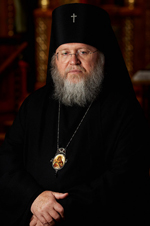
Frs. Michael, Dom James, and Fr. Joseph of Christminster Monastery in Hamilton, Ontario, CanadaMonasteries are in short supply these days, but three out-of-country monks have now found peace, quiet and prayer nine times a day at a new haven on Cannon Street East.

These monks don't mind if you stop by. Somebody did visit on behalf of an online review site called Mystery Worshippers. The guest complains about "a spate of sirens" during the service. But on comfort, he reports "it was probably the best pew I've ever experienced."

And how did the service make him feel? "Ecstatic and, dare I say, a little envious of Orthodox Christians."

So I'm off to Mass, on that struggling stretch of Cannon, just west of Wentworth, at Steven.

For many years there was a coffee shop here, plus a hairdresser and an auto glass company.

But now the corner has been claimed by the new religious settlement. There's fresh brick on the buildings. The sign by the oak double doors, royal blue and gold, declares this to be Our Lady of Glastonbury Orthodox Church. The sign by the steel door beside it, with the image of a robed monk, says Christminster. That's the monastery.

It's 5 p.m. and a service is under way. There usually is.

There's room here for about 30, but today there are five of us. It is a quiet service. Yes, you can hear the traffic, but somehow it seems a long way away.

The man at the front in the black habit -- with the generous profile of Friar Tuck -- is not in a hurry. There are long, quiet pauses. He sings, chants. And then it is over.

There are individual bedside prayers at 5 each morning. More prayers, held in the church, are at 6:15 a.m., 7 a.m., 8:45 a.m., 9:15 a.m., 11:45 a.m., 5 p.m., 6:30 p.m. and 8:15 p.m.

A lot of prayer. "It's a monastery," says Father James Deschene, abbot of Christminster. "That's what we do."

Pray much, talk little. There is the Great Silence, which begins after the 8:15 evening service. Meals are consumed in silence, though there may be something on the CD player -- classical music or James Earl Jones reading the New Testament.

"We don't want just idle chatter," Father James says. "We feed the mind." Yet he is a man of considerable humour and, when it's OK to do so, quite the talker.

He is 66, grew up in Rhode Island, went to a Roman Catholic seminary for four years.

But later he saw the light. "I explored, and Orthodoxy won. I found truth, the real and original church as it was meant to be, no fiddling with the teachings."

The church has small monasteries in Florida and Tasmania. And there was one in Providence, R.I., just Father James and Father Joseph in a little house, no room to grow.

Enter a local man of means, Bob Sherwood, who runs an operation called the White Rabbit Treatment Homes, owns property on Cannon and has a passion for Orthodox religion.

He came to know of the cramped conditions in Rhode Island and offered to renovate the property here for the monks. He would charge no rent.

He spent $200,000 fixing the place up, because, he says, "it seemed the right thing to do."

Last spring, Fathers James and Joseph moved in. They were joined by Father Michael, a convert from California.

Father James says there is still much about Hamilton unknown to him, though he has been to the Black Forest, the Royal Botanical Gardens, the Farmers' Market.

He often goes to Fortinos or Food Basics in his habit and black Crocs. The robe doesn't create a stir.

"I imagine you could wear pretty much anything in Hamilton," he says. "That's not true back in Rhode Island."...

The neighbours have not been hostile...The occasional person has come for a retreat of up to a week, discovering life minus the chatter, the iPod, the TV.

"I'm sure most people would think this doesn't make much sense," Father James says. "But God is real. Our lives are being wasted if He's not."

Their lives are not wasted. Their holy lives are examples for us all, and their holy intercessions open the ears of Heaven to our pleas delayed by our coldness of heart.

Please, never cease to pray for us.

This article and the accompanying photographs appear with the author's permission.

Labels: , ,

Wednesday, January 28, 2009

Video: FULL(er) Christmas Eve Mass with Dom James Deschene

Last week, we posted a condensed clip of Christmas Eve Mass celebrated by Dom James Deschene at the Church of Our Lady of Glastonbury, the chapel attached to Christ the Saviour Monastery (Christminster), a Western Orthodox Benedictine monastery in Hamilton, Ontario, Canada. Dom James and Reader Polycarp Sherwood notified us of a longer clip: 59 minutes long, containing nearly the full Midnight Mass of Christmas as celebrated at this Western Rite Church, according to the Liturgy of St. Gregory. It can be viewed on the church's website or Google Video, and I've embedded it below.


This video, which contains nearly the full Divine Liturgy, answers many, many prayers for those who would love to get a sense of what Western Rite Orthodoxy is like but live too far to visit one of our churches. This is what the Western Rite is all about. As Dom James wrote, "I believe it important for people to 'come and see' (or at least 'see') before critiquing our services. The best education in western-rite liturgy is to worship in it and to pray it." Thanks to him, Rdr. Polycarp, and all those who made this video possible.

As a liturgical note, you may notice this Mass has an Old Testament reading (in this case, from the Prophet Isaiah) in addition to an Epistle and Gospel; and it contains an ancient litany following the Nicene Creed (though not the Great Litany from the Byzantine liturgy, as some claimed for years, even when informed otherwise and asked to issue a correction). These elements (and a few others) are unique to Christminster's recension of the Mass.

This video gives new meaning to the phrase, "Watch, and pray."

Labels: ,

Saturday, January 24, 2009

Video: Christmas Eve Mass with Dom James Deschene

What a joy and blessing this video is! Here is a condensed video of Christmas Eve Mass celebrated by Dom James Deschene at the Church of Our Lady of Glastonbury. Reader Polycarp Sherwood, who posted the video, writes, "The Church of our Lady of Glastonbury is attached to Christ the Saviour Benedictine Monastery (Christminster)...The Church and Monastery maintains a close relationship with the Antiochian Western Rite Vicariate and its various Parishes, some of whom have Oblates under the spiritual direction of Christminster and its Abbot Dom James Deschene."


Dom James has this to say on the church/oratory's website:

This year’s feast of the Nativity of our Lord was the first in our new monastic home in Canada, and was celebrated with great joy.


We were blessed to have with us as guests over the holidays Father Michael Phillips, a monk from the California Monastery of Saint John of Shanghai and San Francisco – and a former visitor to our previous home in Rhode Island; and first-year seminarian Aaron Oliver from Saint Vladimir’s Seminary in New York. With our own Father Joseph having arrived three weeks earlier, we were a full and happy house.


Our Christmas Eve Mass was a crowded celebration – the first time we’ve seen the church completely filled. (Emphasis added.) Visitors included familiar friends and faces, including several Orthodox and Anglican clergy.


The chant schola of the Gregorian Institute of Canada, under the direction of Dr. William Renwick, professor of music at McMaster University, provided the Latin chants for the Mass, as well as traditional carols in which the congregation joined. The service was videotaped and recorded and should be available on our websites in the near future.


A festive collation followed in the monastic refectory, compliments of Bob Sherwood and Ken McRae. As visitors left, snow was falling. We have been told that the old calendar Christmas is always marked by snow in Hamilton – we will have to verify this by more Christmases here.

To all our friends elsewhere, we wish you a blessed Nativitytide and a New Year filled with God’s grace and blessings.


+Fr. James

Abbot

The fact that the church is filled is evident in the video, but the glory of this celebration of the Liturgy of St. Gregory is ethereal. It's far more beautiful than the Mystery Worshiper report could convey. :) Many of our readers and correspondents have asked for a video of a Western Rite Mass for a very long time. Here, at last, it is. (Any chance we could prevail upon Reader Polycarp to post a bit more?) Our deepest thanks to those who shot and posted the video, the choir director and singer, and above all, the monks of Christminster Monastery for manifesting the full Benedictine charism and showing a Western Rite Orthodox monastic life is possible - as well as how beautiful life in the Western Rite is.

Labels: ,

Friday, October 17, 2008

From the Mailbag: Occidentalis Misleads About Dom James Deschene's Office

Q: On the Occidentalis Yahoo Group, the moderator wrote (on October 2, 2008) that Dom James Deschene uses the modern Benedictine office. He wrote that ROCOR approves the:
Tridentine mass. An edition of this service is used at Christminster (Christ the Saviour Monastery) in Hamilton, Ontario, and at the Western rite services done in Oklahoma City. I think the accompanying divine office is the modern Benedictine one, at least in the case of Christminster. (I'm not sure what form of WR divine office Fr. Anthony uses in conjunction with mass).
He contrasted this with "the pre-Reformation Benedictine Office." Does Christminster Monastery really use the modern, post-Novus Ordo Benedictine office?

A: Dom James M. Deschene, hieromonk, certainly does not use the "modern Benedictine" Office, as this individual falsely claims. The Order of St. Benedict in the Roman Catholic Church updated its Liturgy of the Hours following Vatican II and Novus Ordoized them. Neither Hieromonk James Deschene nor anyone else at Christminster Monastery, nor at its attached chapel, has anything whatsoever to do with the "modern Benedictine" office.

This is hardly unknown. I posted on this blog more than two years ago that "in addition to being the unbroken observance of the AWRV, Fr. James Deschene of Christminster Monastery in RI prays these hours." Nor has anyone associated with Christminster been other-than-forthcoming about this fact. Christminster's website notes, "the Hours of the Divine Office - the Work of God as St. Benedict calls it - are sung in chant according to the arrangement he himself set forth in his Holy Rule in the fifth century, and thus the monastic Office is one of the oldest forms of the Hours still in use."

The Breviarium Monasticum is the ancient form of the Benedictine Office, and its structure could be reconstructed by reading St. Benedict's Rule. Somehow, the moderator of the Occidentalis Yahoo Group transformed the most ancient office into "the modern" office and pinned it on Dom James. As noted, the same individual has fibbed on the same group that "Fr. James Deschene of the ROCOR in the U.S. inserts the Litany of Peace (from the Byzantine rite; "In peace let us pray to the Lord," etc.) straight into the middle of his Tridentine Liturgy." (This, too, has been pointed out as false, both here and several times on that group. If this has ever been specifcially retracted, please let me know.)

I also know Dom James does not like the label Tridentine for the simple reason that, for most people, it suggests a late usage, and that is not an accurate view, either of his use or of the Tridentine use. (He is, as usual, correct. See these two posts about attacks on the so-called "Tridentine" Mass's history and liturgics from the same source.) In fact, I know Dom James is a fine traditional Orthodox priest, who has served many long years in ROCOR, and he disdains any form of liturgical modernism or tinkering by self-appointed "scholars."

I am uncertain of the Hours Fr. Anthony Nelson of St. Benedict Orthodox Church (ROCOR) in Oklahoma City celebrates, but we wish him every success, and pray he too is not further maligned or misrepresented by members of this group. (One of its members has implied not so long ago that, due to his bi-ritual church's setup, his Eucharist was invalid and "would seem to make certain implications about the validity of Western Rite Masses in ROCOR." The moderator responded that he was "not so certain anything is implied by this placement of the altar," that Fr. Anthony thought his masses were valid, and this was an "analogue to this placement of the altar (i.e., 'altare' or holy table) in late mediaeval practice on the eve of the R/Deformation" that reflected "the context of the post-mediaeval Roman church.")

Thank you for bringing this misinformation to light. That individual's post displays either ignorance or malice toward canonical Western Rite Orthodox — in this case a long-serving hieromonk — which has long been a hallmark of many of that group's posters (except when it temporarily suits their purposes to tone things down or clam up for awhile). In general, that group is a terrific place to stay away from. As Dom James has written about these provocations, "God save us from 'liturgical wars'!"

This continued misinformation about ROCOR Western Rite monks shows, the "negative campaigning" against other Western Rite Orthodox continues. For shame.

Labels: , , , ,

A ROCOR WRITE Ordination

I have received word that Metropolitan HILARION received Hiermonk Cuthbert (Pierce) of Holy Cross Hermitage in Jacksonville, Florida, into the into the Russian Orthodox Church Outside of Russia by the rite of cheirothesia. The reception took place at the parish in Palm Coast, Florida, on September 29.

Fr. David (as he will now be known) is also charged with caring for Hieromonk Augustine Whitfield, who is in retirement in the area.

Labels: , ,

Sunday, September 28, 2008

Recent Saints Who Supported the Western Rite

Recent Orthodox Saints Who Supported the Western Rite:
This omits St. John of Chicago (Kochurov), who accompanied St. Tikhon on many missionary journeys to Episcopalian churches and was part of the "Fond du Lac Circus" photo. (He was the beardless sainted priest.) St. John could be assumed to support his hierarch's Western Rite initiative -- but to my knowledge he did not specifically say so. (If anyone has information to the contrary, please let me know.)

This list also overlooks the uncanonized divine healer Dom Denis Chambault, a holy monk who celebrated the Benedictine monastic office and the Liturgy of St. Gregory in France under the patronage of St. John the Wonderworker.

Orthodox Saints Who Opposed the Western Rite:


(This space intentionally left blank.)

Take your choice.

Labels: , , , ,

Sunday, August 24, 2008

Mystery Worshipper: Oratory of Our Lady of Glastonbury/Christminster Monastery

For those who can't be at a Western Orthodox church this morning, here is a visitor's account of worshiping at the Oratory of Our Lady of Glastonbury on Holy Saturday. The oratory is the chapel of Christ the Savior Monastery ("Christminster") a Benedictine monastery under the Russian Orthodox Church Outside of Russia and headed by Dom James M. Deschene. It is located in Hamilton, Ontario, Canada.
Oratory of Our Lady of Glastonbury, at Christ the Savior Monastery, Hamilton, Ontario, Canada

Mystery Worshipper: LQ.
The church: Oratory of Our Lady of Glastonbury, at Christ the Savior Monastery, Hamilton, Ontario, Canada.
Denomination: Russian Orthodox Church Outside Russia.
The building: The monastery, of which the oratory is the monastic chapel, is also known as Christminster. It is a single plain brick building on a residential lot. It is extremely small, and there are no grounds around it to speak of. There are separate entrances for the oratory and the monastic residence itself. The left entrance leads into the bookroom and the chapel. The chapel is small, and looks like it could seat about 30 people in the pews. It features a small, traditionally-appointed chancel with an eastward facing altar and an ambo. The bookroom features publications of the Lancelot Andrewes Press, the publishing arm of the Fellowship of Saint Dunstan, a non-profit organisation for the advancement of historic Christian orthodoxy.
The church: The Oratory is a Benedictine Western Rite Orthodox chapel. The monastic community consists of two professed brothers and is primarily contemplative, but has an oblate programme for Orthodox Christians called to participate in the monastic life in a Western Rite context, but not called to religious profession as such. On the day of my visit, the small congregation appeared to be made up entirely of converts from Roman Catholicism and Anglicanism.
The neighbourhood: The monastery sits on Cannon Street East, a long, rather seedy thoroughfare comprised mainly of car dealerships, service stations, and sad-looking duplexes. I walked from number one to number 390 (the monastery) without passing a single Tim Hortons coffee franchise – surely this is wilderness according to the Canadian definition.
The cast: The Rt Revd Dom James M. Deschene, Abbot, was the celebrant.
The date & time: Saturday, 26 April 2008, 7.30pm.

What was the name of the service?
The Great Vigil and First Mass of Easter, with the Office of Lauds and the Sacrament of Confirmation.

How full was the building?
There were nine of us in the intimate nave. I had a pew to myself.

Did anyone welcome you personally?
Everyone welcomed me personally, including a young married couple who were being received into the Orthodox Church that night.

Was your pew comfortable?
It was possibly the best pew I’ve ever experienced. However, there were great stretches where it was not used, which tested the strength of my legs.

How would you describe the pre-service atmosphere?
It was very friendly and there was a real sense of fellowship. We waited in the bookroom while Dom James finished hearing confessions. Everyone present took time to introduce themselves to me, solicit (kindly) information about me, and in a couple of cases, tell the stories of their journey to Orthodoxy. I made it clear that I was Anglican, not Orthodox, yet was not made to feel the liberal Anglican bogeyman. Then Dom James came in and I introduced myself to him. It turns out that we have a mutual friend! Dom James invited me, and everyone else, to read one or two lessons since the twelve Old Testament prophecies outnumbered the congregation. I inquired about receiving communion and was told that I was welcome to receive a blessing.

What were the exact opening words of the service?
"Let us pray."

What books did the congregation use during the service?
A homemade leaflet entitled "Holy Saturday" contained almost everything I needed to know. At a couple of points, I needed to refer to the Orthodox Missal, which contains the Western Rite liturgy, of which there were copies in the pews.

What musical instruments were played?
None at all. The plainsong of the service and the two hymns were hauntingly sung
a cappella.

Did anything distract you?
The lectern from which the prophecies were read was at the rear of the chapel, and it was tempting to turn my head to hear the source of the voices (that is, when I wasn’t reading myself). There was a spate of sirens at one point which could very clearly be heard from outside. I made a mental note to take a cab back to the bus terminal that night.

Was the worship stiff-upper-lip, happy clappy, or what?
Christminster’s website explains that their liturgy is similar to what one would have found in a Roman Catholic or Anglo-Catholic parish before the Second Vatican Council. That about sums it up. It was not a "spiky" experience, given the intimacy of the occasion, but it was certainly formal and reverent. The service began in the bookroom with the blessing of the new fire, and continued with a procession into the chapel, followed by the longest version of the Exsultet I have ever heard. The prophecies were read, the litany of the saints sung, and the sacrament of confirmation administered. We renewed our baptismal vows, were sprinkled, and then sang a psalm before the mass proper began. Parts of the liturgy were sung that I have never heard sung before: the prayer known as the Secret that precedes the eucharistic prayer; the "Lord, I am not worthy" prayer before communion; and so on. There was the occasional use of Latin, including a congregational Regina Caeli to plainsong. The service ended with lauds, which consisted of a single psalm with antiphon and the Benedictus.

Exactly how long was the sermon?
5 minutes.

On a scale of 1-10, how good was the preacher?
8 – Dom James spoke with a very comforting tone.

In a nutshell, what was the sermon about?
He welcomed the confirmands and assured us that our sins had been defeated by Christ.

Which part of the service was like being in heaven?
The joy and trust of the two people being confirmed into the Orthodox faith.

And which part was like being in... er... the other place?
The saddest manifestation of our Christian faith is the fact that we cannot all join as one around the altar of the Lord. I long for the day when that will be possible, as I imagine all Christians do. Meanwhile, I must say that my irregular status was handled with acute pastoral panache.

What happened when you hung around after the service looking lost?
Not a chance. We all began to "lighten it up" after the Lauds had concluded, but were reminded that the house custom was to "take it outside." And so we retired back to the bookroom for further conversation and the repast.

How would you describe the after-service coffee?
There was a very respectable-looking spread of fruits, cheeses, cakes and cookies – but nothing to drink! As I was ready to leave, a discussion about whether to make coffee or tea was, erm, brewing. I thanked everyone and called my cab. I would have liked to stay and bask in the afterglow, but the liturgy had gone on for over three hours and I had to catch the last bus home or risk being stranded in a strange city. I handed a monk an envelope containing a donation and my Mystery Worship calling card, and promised to return. Settled in the back seat of my cab, I made a mental note to purchase a copy of Ritual Notes for myself.

How would you feel about making this church your regular (where 10 = ecstatic, 0 = terminal)?
7 – While I wouldn’t seek membership in the congregation, I would gladly attend vespers and benediction there every Sunday if I lived in Hamilton.

Did the service make you feel glad to be a Christian?
Ecstatic – and even, dare I say, a little envious of Orthodox Christians.

What one thing will you remember about all this in seven days' time?
The solemnity and joy with which a gathering of two or three can proclaim the Lord’s death and resurrection until he comes.
All-in-all, this looks like a very positive impression. Nothing could be done about the only real complaint, that he could not receive the Eucharist, and this person yet left "ecstatic" with the sober joy of the Latin tradition. He did not immediately seek to join the Orthodox Church...but not all instantly do. This is a wonderful report about the leadership, and laity, of Our Lady of Glastonbury Oratory. Deo gratias et soli Deo gloria. Thanks to a Canadian reader for sending this our way!

Labels: ,

Sunday, August 03, 2008

From the Mailbag: Western Rite Missions in England?

Q: Your Western Orthodoxy blog shows in its entry for July 16 a clergyman censing the congregation at a ROCOR Western-Rite liturgy in London.

On the assumption that the London in question is London the capital of the UK rather than London, Ontario, Canada, I should be interested to know if WR liturgies are a regular occurrence in London and who organises them.

I am an Anglican with a long-standing interest in Orthodoxy and who is needless to say unhappy with what is going on in Anglicanism at the moment.

I assume that you are the author of the blog, if not please congratulate him from me on splendid piece of work.

A: Thank you for your kind words about my poor, unofficial blog. The liturgy was, indeed, held in the UK rather than Ontario (although there is a ROCOR monastery not far from London, Ontario, as well). The celebrant of the Mass in London, Fr. Michael of St. Petroc Monastery, recently addressed the issue of Western Rite missions in Great Britain. Here's what he wrote:
In the aftermath of the Church of England's General Synod decision to go right ahead with bishopesses, and of the shambles that Rowan Williams has managed to make of Lambeth, it is timely to say out loud to Church of England laity, that there is an alternative to the pseudo-leadership of the papacy. The Pope is neither the only nor the best way for members of the Church of England to go!! How many Church of England people realise that the Western Rite was first authorised for Orthodox use specifically IN ENGLAND over a hundred and thirty years ago (just after the Primus of Scotland had visited Russia and discussed unity with Church authorities there - and reported his conversations to the Convocation of Canterbury)? How many realise that services extracted from the Book of Common Prayer were authorised for adaption for Orthodox use over a hundred years ago? How many realise that there have been Orthodox Benedictine monasteries for over sixty years? That the Church of England non-Jurors discussed joining with Orthodoxy in the eighteenth century? Or that the first Anglican parish joined Orthodoxy over thirty years ago? Embryo Western Rite parishes/missions can be formed immediately in England (or Scotland or Wales) and seek immediate Orthodox oversight while they prepare themselves for formal reception. A Western Rite Orthodox Prayer Book already exists - it is just a matter of them making contact with us.
Missions in the UK are dear to Father's heart. He is always searching for those who wish to live out their Orthodox theology in an approved Western liturgical form.

You can contact Fr. Michael here. You can also reach him through the St. Petroc Monastery website or through his online discussion site, Ely Forum.

Thank you for contacting me. I pray your correspondence is a fruitful one, and Godspeed to you on your journey home.

Labels: , , , ,

Thursday, May 29, 2008

From the Mailbag: Which Jurisdictions Have a Western Rite?

Q: What are the Orthodox Churches that currently allow Western rites? I know OCA and Antioch do, but does anyone else?

A:
Through the wonders of the internet, this question comes from overseas. We're glad to have inquirers of Orthodoxy, whether in its Western Rite expression or not, around the world. I know North American jurisdictionalism and the attendant issues of who allows or disallows Western Rite worship must be as confusing from afar as they are unedifying up close. I hope this clarifies things a bit.

A large number of Orthodox churches have celebrated, approved, or agreed to the concept of a Western Rite within the last 140 years, including among others Constantinople (briefly), Antioch, Alexandria, Moscow, ROCOR (when it was not yet in communion with Moscow), Romania, and Poland.

Only two canonical Orthodox jurisdictions officially allow the use of Western Rite worship at this time: the Antiochian Orthodox Church and the Russian Orthodox Church Outside Russia (ROCOR).

In Antioch, Western Rite Orthodox worship was approved by the 167th patriarch of Antioch, H.H. ALEXANDER III (Tahan) in 1958. The largest concentration of Western Rite parishes, under the Antiochian patriarchate or anywhere in the world, is in North America under the Antiochian Western Rite Vicariate. In the Antiochian Archdiocese of Australia and New Zealand, there are also Western Rite parishes.

In North America, ROCOR currently has one monastery with a mission, Christminster of Hamilton, Ontario, Canada, and one bi-ritual parish, that being St. Benedict of Nursia in Oklahoma City, Oklahoma, pastored by Protopriest Fr. Anthony Nelson. Outside of North America, ROCOR has one monastery: St. Petroc, in Hobart, Tasmania, Australia. That monastery celebrates the Sarum Liturgy as approved by ROCOR (N.B.: Not the "Old Sarum Rite Missal," a radically different liturgy, which Fr. Michael of St. Petroc has described in negative terms). St. Petroc has a number of dependencies around the world, which celebrate either Sarum or The English Liturgy.

Unfortunately, the OCA not only does not have any Western Rite churches under its care, but I have been told the OCA gave a firm (official or unofficial?) "no" to the Western Rite a number of years ago. If this is so, it is disappointing and at odds with its own history within Russian Orthodoxy. However, the OCA certainly has no Western Rite parishes at this time and has a somewhat dismissive comment about the WR on its website.

There are reports of Moscow Patriarchal churches celebrating the Liturgy of St. Gregory and/or the Liturgy of St. Tikhon, as well as an OCA establishment using Western Rite prayers. However, neither church has any official information available, so one couldn't say anything about such reports.

I hope that helps. Thanks for writing!

Labels: , ,

Friday, May 16, 2008

Religion and Terror: Death of a Myth

I'm pleased to bring this blog's readers the first original article on this blog written entirely by someone else (which should guarantee the quality will vastly outshine everything on this site). This guest post was written by Dom James Deschene, a priest and monk at Christ the Savior Monastery (colloquially known as "Christminster"), a Western Orthodox monastery in the Benedictine tradition. After reading our blog post on how the KGB of Belarus is trying to discourage veneration of the Russian New Martyrs, this obedient son of the Russian Church sent in this reflection on militant atheism, the sources of violence, and a wizened slander of religion:
RELIGION AND TERROR: DEATH OF A MYTH
by Fr. James M. Deschene

In the wake of 9/11 – its memory still fresh in our minds – we tend, somewhat understandably, to cling to a myth common to our age: that the primary source of violence, terrorism, and persecution in history has been religion and its dogmas. And to put an even finer point on it, it is alleged that the prime offender in this (at least until the recent rise of Islamic terrorism) has historically been Christianity. The myth usually alludes at this point to witchcraft trials, the Inquisition, and similar atrocities, all of them propagated by religious powers, usually the Christian Church in the days when it wielded the power to commit such offenses. The myth includes, usually implicitly and without stating it, the belief that we have come a long way since those darker ages and have made much civil progress, having left behind us in the detritus of history such blots on our humanity. Our belief in our own modernity adds to our shock at recent terrorist attacks, as if they were a curious relic of the middle ages, an alien and benighted anachronism oddly popping up in our own allegedly enlightened times.

But have we lived in enlightened times? Have we really progressed that much from these crimes of a former age? And has religion really been the bloodiest contributor to human evil? In fact, a case can easily be made that the bloodiest century in western history – a century marked by martyrdoms, persecutions, massacres and holocausts on an unprecedented and epic scale – is the century just past: the twentieth. There is a greater irony still: the deaths of these millions by violence, terror, and holocaust were carried out not by any dogmatic church or religious power, nor by isolated terrorist groups, but by militantly and explicitly atheistic regimes. These killings were carried out not in the name of God, but of men – Stalin, Hitler, Mao, Pol Pot. These men ruled with absolute power, unchecked by any higher divine authority, and their killing and terrorism were systematic, sustained, governmental – not at all like the limited and random acts of underground terrorist organizations. It has been estimated that Communists in Russia killed in a single day more martyrs than the Inquisition executed in its entire history. We are understandably appalled by the fall of the Twin Towers on 9/11, having seen it with our own eyes. But no less real, though hidden among the facts of history, is the appalling amount of death-dealing committed in the twentieth century in the name of a powerful atheistic mentality able to incarnate itself in governmental and social forms.

By happy circumstance, a part of that tragically tattered twentieth-century tapestry of death has been mended. On 17 May 2007, one of the greatest wounds inflicted by Stalin’s atheistic regime was healed, after nearly a century of pain. With the 1917 Bolshevik Revolution in Russia, there began in that vast empire a programmed and systematic attempt to deconstruct the long-established Orthodox Church. From that date, until shortly before the fall of the Soviet Union seventeen years ago, literally millions of churchmen, both clergy and layfolk, were brutally and systematically imprisoned, humiliated and put to death for no reason other than their religious beliefs. So powerful was the machinery of death that some prominent church leaders were persuaded, in exchange for their lives and some measure of comfort, to tell the world outside the Soviet Union that there was no persecution of religion at all in their country, that all was well. Those who refused to proclaim the party line – i.e., those who refused to lie – were snuffed out or took themselves into hiding into what became known as the Catacomb Church.

Meanwhile, Russian émigrés, having fled successfully this dark regime to the safety of Europe and America , struggled to keep alive the flame of the persecuted Orthodox faith. Blessed with the freedom permitted in their adopted countries, these émigrés spoke out against the godless regime in their former “Holy Russia” but their voices were often drowned out by the more strident messages coming from their fatherland, where both civil and church authorities, in a united front, proclaimed that there was no religious persecution in Russia. The world outside Soviet influence had to make up its own mind whom to believe, and it was often, for reasons of politics or diplomacy, that the voices of the émigré Church – known then as the Russian Orthodox Church in Exile – were ignored or disbelieved. Subsequent history, of course, has proven their claims of persecution to be true and by no means exaggerated.

Inevitably, in the ensuing seventy years, relations between the two parts of the Russian Church were strained and volatile. But with the death of the former Soviet Union and its systematic and governmentally administered atheistic program, the long divorce between the two estranged parts of the Russian Church has reached a point of healing. In May 2007 the numerically small, but symbolically significant Church in Exile (known in recent years as the Russian Orthodox Church Abroad or the Russian Orthodox Church Outside Russia), rejoined its mother church – numerically the largest of the Orthodox Churches – in a series of jubilant celebrations in Russia as all past divisions were buried and forgiven. The united Russian Church firmly believes that its present fortunate state is due in no small part to the blood and sacrifice of its millions of martyrs under the scourge of an atheist regime.

What makes this so very poignant for me, as a native American with no Russian roots, but as a convert to Russian Orthodoxy, is a book that vividly sets forth much of the bloody history I have referred to here, written by Father Seraphim Rose, also an American convert to Russian Orthodoxy. Russia's Catacomb Saints is a harrowing but edifying history of the humiliations and torments these modern martyrs underwent in defense of their faith. But the real eye-opener for me is the epigraph Fr. Seraphim wrote after the title page: “Today in Russia, Tomorrow in America.”

What a tragic irony indeed if that were to turn out to be true. But there is no open religious persecution in America – yet. On the other hand, one can legitimately ask whether this country is as solidly religious as it once was; whether it is as religious as it still thinks it is and claims to be. If the Russian experience is any example, the first downward step is the desire for liberation from the past, especially the religious past. The next step, inevitably, is civic godlessness – abolishing God from the public square. Only then, with any higher court of appeal or value abolished and nullified, can persecution freely begin. In the mean time, perhaps we can lay aside the baseless modern myth that religion is the cause of most human suffering and oppression. Modern history just doesn’t bear that out.

And there is this further hopeful sign. In 1931 under orders from Stalin, the magnificent Cathedral of Christ the Savior was dynamited and reduced to dust and rubble. And yet, even with unprecedented military might and absolute political power on its side, an officially atheistic regime in power for eighty years has itself passed into dust and rubble; and the Russian Church it sought to divide and spoil and demolish celebrated its resurrection on May 17th in a newly rebuilt Cathedral of Christ the Saviour. On that happy day the words of Fr. Seraphim Rose took on a new poignancy for us: “Today in Russia, tomorrow in America.”

Fr. James Deschene
Christminster Monastery
Hamilton, Ontario, Canada

Copyright 2008, James M. Deschene. All rights reserved.

Editor's Note: As always, Dom James has given us much to think about, perhaps also to comment upon. I hope we'll have many more such contributions in the future.

Labels: , ,

Tuesday, May 13, 2008

Gaudium Magnum: ROCOR's New Hierarch a Friend of WRO

Fr. James Deschene sent out this e-mail this evening (Monday):

NEW YORK: May 12, 2008
Archbishop Hilarion Is Elected First Hierarch of the Russian Orthodox Church Outside of Russia

May 12, 2008, at 12:00 noon, at the Synodal Cathedral of Our Lady of the Sign in New York, His Eminence Archbishop Hilarion of Sydney, Australia and New Zealand was elected Primate of the Russian Orthodox Church Outside of Russia, and shall be elevated to the rank of Metropolitan. In accordance with the Act of Canonical Communion signed on May 17, 2007, the Council of Bishops will send the Act of Election, drawn up by the Counting Committee, to His Holiness Patriarch Alexy II of Moscow and All Russia, with a request from the elected First Hierarch for his blessing to assume the duties placed upon him by his brother archpastors, and for confirmation by the Holy Synod of the Moscow Patriarchate of his election.

The Enthronement of His Eminence Metropolitan Hilarion of Eastern America and New York, Primate-elect of the Russian Orthodox Church Outside of Russia, will be held on Sunday, May 18, 2008.

The schedule of services relating to the Enthronement of the new First Hierarch is as follows:

May 17, all-night vigil at 6 pm. At the end of the evening service, the newly-elected Primate will emerge from the Royal Doors in a black klobuk [monastic headdress] and a simple episcopal mantle and will stand on the ambo facing the people. Two senior bishops will bring the light blue mantle and white klobuk to the Metropolitan, who will don them with the help of subdeacons. During the vesting of the mantle and klobuk, the senior bishop will intone "axios" ["he is worthy"], which will be repeated first by the bishops and clergymen, then by the choir. Afterwards, the Metropolitan will bless the clergy and people.

The light blue mantle and white klobuk will first be blessed with holy water by the senior archbishop during the reading of the first hour.

May 18, Divine Liturgy at 9:30 am. After the entry prayers are read and the customary blessing, two senior bishops will lead the new Metropolitan to the vesting platform and will declare "axios," which will be repeated first by the bishops and clergy, and then by the choir.

The newly-elected First Hierarch will then be vested in the middle of the church, while the other bishops are vested in the altar. Thereafter, two senior archimandrites or protopriests will bring out the mitre and will silently present it to the Primate of the Russian Orthodox Church Outside of Russia.

After the moleben, the senior hierarch will bestow the staff to the First Hierarch—a gift from the Diocese of Sydney, Australia and New Zealand, which was blessed upon the relics of St Tikhon, Patriarch and Confessor of All Russia—and will declare:

"May the Almighty and Life-giving Trinity, Boundless Sovereignty and Indivisible Kingdom, grant to you this great throne of episcopacy, to be Metropolitan and Primate of the Russian Church Abroad, through the election by your brethren, the bishops of the Russian Church Abroad. And now, lord and brother, accept this pastoral staff, and ascend the throne of the episcopal seniority, in the name of our Lord Jesus Christ, and beseech His Most-Pure Mother for all Orthodox Christianity and for the Russian people in the diaspora entrusted to you and save them as a good pastor will, and may the Lord God grant you health, well-being and many years."

The Archdeacon will then intone Many Years to the new First Hierarch of the Russian Orthodox Church Outside of Russia. The choir will sing Many Years.

In accordance to the Rite of Enthronement, the newly-elected Primate will address his brother archpastors with the following words:

"May the Almighty and All-Sovereign Right Hand of the All-Highest preserve and strengthen us all. May He grant peace and calm to His Holy Church and save our Fatherland from enemies visible and invisible, and grant strength to Orthodoxy. And to you, brother archpastors of the Russian Church Abroad, and to all Russians in the diaspora, and all Orthodoxy Christians, may He grant health and many years."

The choir then sings Many Years (without an intonation by the Archdeacon).

+ ACT

On April 29 (May 12), 2008, on the feast day of the Nine Martyrs of Cyzicus, we, the undersigned bishops of the Russian Orthodox Church Outside of Russia, having gathered in the church of our Most-Holy Queen, the Mother of God and Most-Pure Mary, in honor of the Miracle-working Icon of the Sign, by means of secret ballot, elected the Primate of the Russian Church Abroad, for which 8 written ballots were submitted by the bishops in attendance and 3 ballots from absent bishops. Upon unsealing the ballots, the following votes were revealed:

Archbishop Hilarion 9
Archbishop Mark 2

+Archbishop Kyrill
+Bishop Agapit
+Bishop Peter

[End of Dom James' e-mail.]

Abp. HILARION of Sydney has played a role in helping Dom James over the years, and he has more recently presided over Fr. Michael's missionary work in Tasmania (and well beyond).

Here is a film of his sermon at St. Petroc's Monastery on Michaelmas (February) 2004 (Quicktime Movie), after presiding over Fr. Michael's celebration of The English Liturgy.

May God grant Vladika in peace, safety, honor, health, and length of days, and rightly dividing the word of His truth. (And dividing wheat from chaff, and sheep from wolves.)

Labels: , ,

Saturday, May 03, 2008

Dom Denis Chambault

Dom Denis (Lucien) Chambault reposed on this date in 1963. He was "an acknowledged healer" and the abbot of an Orthodox Benedictine monastery in France that celebrated the Liturgy of St. Gregory (the "Tridentine" Mass). Although a Frechman, this holy man played a pivotal role in the development of the Western Rite Vicariate of the Antiochian Orthodox Church, in North America and throughout the patriarchate...

For more on Dom Denis, see our previous entry.

Dom Denis Chambault, ora pro nobis!

Labels: , ,

Monday, February 18, 2008

An E-mail from Down Under

Our friends at Journey to Orthodoxy have posted an e-mail from a "convert" out of the Baptist church...in Australia. He joined ROCOR and found the JTO blog on the web (and, naturally, liked what he saw). The two unique parts of his story (to me) are that he had dabbled in many non-Christian religions before finding Christian Orthodoxy, and that he was brought to Orthodoxy, in ROCOR, by two people: one an atheist and the other a Jew. The story picks up from there:
After establishing a friendship with this Orthodox friend, I decided to go to an Orthodox Bookshop. As I entered the store, I was warmly greeted and sat down to explain my situation to the workers. They recommended me to go to the Russian Orthodox Church Outside of Russia rather than the Greek Orthodox Archdiocese, even though they were Greeks themselves. The reason being the purity of the faith generally retained by ROCOR as opposed to the involvement with ecumenism and World Council of Churches on the part of GOA. I even arranged to speak with the Archbishop of Australia, His Grace, Hilarion.

After much discussion and investigation into Orthodoxy, I came to the conclusion (in conjunction with the Church Fathers) that the Church of Christ Visible is One Holy, Catholic and Apostolic Church retained in Orthodoxy...Orthodoxy is the way of unchanging conviction in Christ being lived out in an ever-changing world...

In the heart of every hardcore Fundamentalist is someone who is truly Orthodox. They just do not know it yet.
Thanks to JTO, and the move of the Holy Spirit, many hardcore fundamentalists are finding this out and finding their way home to the Orthodox Church founded 2,000 years ago, and not a few are finding their way to the Western Rite of canonical Orthodoxy. We welcome them home (and hope they'll bring their friends). :)

It's well worth reading this whole story on JTO.

(Hat tip: Journey to Orthodoxy, but you knew that, didn't you?)

Labels: ,

Thursday, February 07, 2008

From the Mailbag: Education of Western Rite Priests?

Q: Hi Ben,

Love the blog and have been a reader for a long time. I was wondering if you would mind providing some details on education for ordinands. Obviously, most clergy come from other churches and did seminary long ago. But does the Western Rite Vicariate send people to seminary again? Where do they go?

A: Thanks for the question, as well as your kind words about this small blog.

In a nutshell, our Western Rite Orthodox students have the same theological education as Byzantine Orthodox students. They go to an Orthodox seminary and study Eastern Orthodox theology from Orthodox professors alongside Byzantine seminarians. As I've noted (and sometimes been disparaged for), "Western Rite Orthodox do not have a unique or different approach to theology from our Eastern Orthodox brethren."

As with (more) Byzantine "converts," some Western Rite parishes joined en masse. To avoid leaving them clergy-less, these priests (who usually had seminary degrees) went through St. Stephen's Course, with its Master's program through Balamand University. Others have gone on to get their Doctor of Ministry through the Archdiocesan program. (I know, at a minimum, Fr. Joseph Gentile [AWRV] did so a few years ago.)

Since these seminary chapels celebrate the Byzantine rite, where do Western Rite Vicariate students learn about liturgics? Through the St. George Institute, Fr. Edward Hughes visits Antiochian WRV seminarians to instruct them in the liturgical aspects of serving the Western Rite. (Fr. Hughes is a fine priest and an outstanding teacher.) Subdn. Benjamin Andersen, who worshiped at St. Mark's AWRV in Denver, served another Western Rite mission while at St. Vlad's.

I'm not certain how ROCOR handles this matter, but Fr. Michael of St. Petroc Monastery seems favorably disposed to having students learn via the University of Joensuu (Finland)'s Orthodox Theology program, followed by hands-on liturgical training. (And of course, Fr. Anthony Nelson, who has a bi-ritual parish in Oklahoma City, graduated from Holy Trinity Seminary in Jordanville.)

To be brief, Western Rite Orthodox priests have the same theological training as Eastern Orthodox, because they have the same faith as Eastern Orthodox. At present, our seminarians are trained liturgically in a hands-on manner and from what I've seen, are trained well. At a minimum, perhaps the relationships WRO develop with their fellow students at seminary, through St. Stephen's Course and/or through other Orthodox educational programs will demonstrate that Eastern and Western Rite Orthodox share a common faith and will help unite them in a unity of the heart, even as the Eucharist unites them in a mystical union all Its own.

Labels: , ,

Wednesday, October 03, 2007

St. Benedict Western Rite Church, ROCOR

Great news: there is more than one Western Rite parish in Oklahoma City! The new Antiochian WRV parish in OKC has a predecessor in another canonical jurisdiction. St. Benedict Orthodox Church (ROCOR) in Oklahoma City, OK, describes itself as a bi-ritual parish blessed to serve both the Byzantine Divine Liturgy and the Western Rite liturgy approved by the Russian Church in 1872 (the "Western Rite Liturgy of St. Gregory the Dialogist" or "the pre-Schism Latin Mass"). Glory to God! On that site, you can see some beautiful photos of Fr. Anthony Nelson serving the Western Rite liturgy. How thrilling to see the Western Rite continue to advance in ROCOR in an authentic manner adhering to its venerable tradition.

(Update: Someone pointed out how sad it is that a certain vagante has enviously demeaned this rite as a "deformation.")


Labels: ,

Friday, August 31, 2007

Update on Christminster Monastery

Forgive what a long interval I've had in updates. One of the side effects is news items have fallen through the cracks. However, as I've not seen this posted anywhere else, at all, I'll pass this one one:

This blog reported on Hieromonk James M. Deschene's decision to move to Canada, with the help of several would-be Antiochian Western Rite faithful. Dom James Deschene, who founded Christminster Monastery in Rhode Island and will re-found it outside Toronto, reports he had a safe and profitable trip to Canada, where he celebrated the Western Rite Liturgy of St. Gregory for a group of people including Reader Polycarp Sherwood.

We wish them all, and a long and spiritually profitable relationship.

Labels: ,

Thursday, July 05, 2007

Love from Our Critics

Some light and love from a persistent critic:
ROCOR has quite uncatholically failed to offer a pastoral provision for married Anglican Bishops seeking reunion, thereby raising inessential Orthodoxy canons to the level of dogma (that which is essential for communio in sacris.)

...your blogger maintains his position that Western Rite Orthodoxy (WRO), is simply not a viable option for traditional Anglicans seeking the authentic Orthodoxy and Catholicity of the Ancient (not Medieval) Church. Traditional Anglicans seeking Ancient Catholicity in their own cultural idiom simply will not find it in the philetism-plagued, ghetto Orthodoxy of today. (Grammar and spelling in original - BJ.)
This blogger also believes "a third approach, not yet offered by Orthodoxy or Anglicanism, is needed for any usable and edifying Orthodox-Catholic English Use." His message seems to be there's not much one can do to further one's spiritual life but read our critic's blog and await further instructions. One wonders if he's given wider consideration to the spiritual perils of remaining out of communion with Christ's Body, the Orthodox Church? Is the devotion to Christ and the catholic ecclesia He founded or to a certain, self-selected form of prayer? Does he believe the Church would give its children a serpent for a fish and a stone for bread?

For the record, ROCOR, along with every other canonical Orthodox jurisdiction, allows married bishops to be reunited...as priests. The ancient Western Orthodox tradition demanded priestly celibacy earlier than the East began selecting bishops primarily from the monastic life. It's hardly out of the question to ask those who join the Orthodox Church to abide by Her (long-standing) canons. Bp. Robert Waggener gave up his episcopal status to join the Antiochian Western Rite Vicariate. Likewise, Antioch did not receive the founders of the Evangelical Orthodox Church as bishops. Such a demand wouldn't be too onerous, if one's goal was unity with Christ's Body, the Church, rather than an authoritative and magisterial position within same. Ultimately, we must come to Christ empty-handed in a spirit of humility.

And ghetto is totally in. Word.

Labels: ,

Tuesday, May 01, 2007

Christminster Monastery Moving to Canada

(Dom James M. Descehene sent out this notice today. We wish him well in his move and thank Reader Polycarp for his beneficence. His generosity in time will undoubtedly be repaid in eternity. -- BJ.)

To all friends and benefactors of Christ the Saviour Monastery:

As all of you know, our existence as a western-rite Benedictine community within the Russian Orthodox Church has not been without its struggles. It has only been by the grace of God, the gift of patience, and the prayers and support of our friends and benefactors that we have managed to endure through the past thirteen years.

In 1993, under the loving oversight of Archbishop Hilarion (then Bishop of Manhattan), our existence as a canonical entity separate from the Orthodox Monastery of Our Lady of Mount Royal was formally established. Since that time we have lived in Pawtucket, Cranston, and finally in Providence, in the small house that contains our worship and living space. At the time this was adequate for present needs, but it allows no room for growth in new monastics or the reception of guests or retreatants. We have received men and women as extern oblates, and we treasure their prayerful support. But the true growth of a monastery is measured in its professed monks, and we have not been equipped to seek such growth. We have had to turn away a number of inquirers or encourage them to become Oblates as a temporary measure.

Now, thanks to the vision and material help of some benefactors, we have been invited to move to Ontario, Canada, in the city of Hamilton. Here the vision and efforts of Reader Polycarp (Robert) Sherwood have built the Oratory of Our Lady of Glastonbury. In looking to staff this mission, Mr. Sherwood turned to us, inviting us to move into a monastic building adjacent to the Oratory - a building that he has purchased and is refurbishing precisely to suit the needs of a growing western-rite Orthodox Benedictine monastic community. This is to be the new home of Christ the Saviour Monastery - Christminster - with the Oratory serving as its monastic church.

Generous support for this work is being provided by Mr. Sherwood, Fr. John Connely and the parish of St. Mark's in Denver, and the Saint Lawrence Trust. Archbishop Hilarion graciously obtained from Bishop Gabriel, whose episcopal oversight includes Eastern Canada, a blessing for this move. Further encouragement for this mission has come from Bishop Basil of the Antiochian Diocese of Wichita, and from Father Paul Schneirla, Vicar for the Western Rite in the Antiochian Archdiocese, and a long-time friend and supporter of Christminster's work. All of these have recognized the spiritual value to western-rite Orthodoxy of a fully functioning monastic community in the ancient Benedictine tradition.

We anticipate moving sometime in late 2007. In the meantime, much work needs to be done, both in disengaging ourselves from our present monastic home and in readying our future home in Canada. We ask the prayerful support of everyone during this time, with its inevitable disruptions and adjustments.

Among the most difficult aspects of this move will be leaving behind very dear friends and supporters here in Rhode Island and the New England area. Our wish would be that everyone near and dear to us could just move with us so we could maintain these wonderful relationships. God seems to be calling us out of a comfortable and familiar world into a hopeful but unknown future - not very far away, to be sure, but within an unfamiliar culture and in a new country. It is always difficult to uproot oneself, but especially so as one grows older and tends to prefer stability and avoid change. Indeed, Saint Benedict calls us to stability even as he directs us to hearken to God's voice calling to us. It cannot have been easy for the patriarch Abraham to begin, at an advanced age, his journey of faith, leaving behind the old familiar world. But he is the icon to all of us of heeding the call of God, at whatever cost, and welcoming it as the only wholesome choice to be made. With Abraham, we believe that God, in calling us into a new path and a new place, will remain present and faithful, guiding us, as he has most assuredly done over the years.

We ask of all our friends and benefactors your continued prayers and support for our mission, and for an increase in vocations to the monastic life in the western-rite Orthodox tradition of our holy Father Saint Benedict.

The Rt. Rev. Dom James M. Deschene
Abbot of Christminster
Providence, RI

May 2007

Labels: ,

Friday, March 16, 2007

Western Rite Centenary Celebration

[An exciting news item from this new blog. What a fitting and holy celebration of the spirit of the document. I would have loved to have been there. The pictures are quite nice, though. - BJ.]

LONDON 7th of March 2007: On Sunday the 4th of March, the Divine Liturgy of the Western Rite was celebrated at the nine hundred year old Saxon-Norman church of Saint Mary the Virgin at Capel-le-Ferne in Kent. Matins preceded the Divine Liturgy.

The celebration was in honour of the centenary of the decision of the Holy Synod of Russia to permit the adaption of services taken out of the Book of Common Prayer, for use by Orthodox people. The decision was made at the request of Saint Patriarch Tikhon (Belavin) of Moscow in 1904. A committee set up by the Holy Synod, which included Saint Tikhon, reported back to the Holy Synod in 1907, and the Synod acted upon its favourable report.

That decision followed in the spirit of a decision made by the Holy Synod thirty-seven years earlier, when it had legislated permission for an adaption of the Western Rite Liturgy of Saint Gregory to be used by Orthodox people.

The Liturgy celebrated this last Sunday was the “English Liturgy” taken from The Saint Colman Prayer Book, (authorised by Archbishop Hilarion (ROCOR) some years ago) the services from which are now in use by episcopal blessing in several ROCOR dioceses.

The celebrant at Capel-le-Ferne (picture below left) was Fr. Michael, superior of Saint Petroc Monastery (ROCOR) assisted by Fr. Barry Jefferies of Saint Stephen Mission, Launceston (ROCOR) and was attended by an invited congregation from Orthodox societies and parishes in England, the USA, Australia, France and Belgium. The choir was directed by Mr. Michael Astley from Manchester.

The Western Rite, having been permitted by the Holy Synod of Russia, was later also permitted by the Holy Synods of Antioch and Romania. As a result, the first Western Rite diocese was erected in Czechoslovakia in 1919, which yielded the Church the Martyr Bishop Gorazd Pavlik during WWII. It was followed by a diocese in Poland and, in 1936, by the Orthodox Church of France, all of which were decimated by the Germans during WWII.

Saint John of Shanghai consecrated Fr. Evgraf Kovalevsky as Western Rite as Bishop Jean-Nectaire of the Diocese of Saint Denys, Paris and strongly supported the Western Rite within ROCOR and Orthodoxy in general. He is recorded as celebrating the Western Rite Liturgy himself both in France and in the USA.
Further celebrations of the centenary of the Holy Synod of Russia decision are planned for later in the year, including a solemn pontifical celebration at the church of Saint Mary the Virgin, Waverley.


(Saint John celebrating the Western Rite Liturgy in Paris.)

The church of Saint Mary-the-Virgin at Capel-le-Ferne is used by the Saint Eanswythe Orthodox Study Society. The exact dating of the original church is difficult in that it is in the style of the pre-Schism Anglo-Saxon churches, but modified later by the Normans. It is possible that it dates from around the turn of the first millennium.

The final picture is of the procession out through the Rood Screen at the end of the Liturgy. New icons for the church were painted in the first millennium Anglo-Saxon style by the Saint Eanswythe Society's iconographer, Eadmund Dunstall (see Christ Pantocrator at the head of this article).

Labels: ,

Monday, March 12, 2007

Fasting Rules of Christminster Monastery, Providence, RI

This is the final installment of our discussion on Western Rite fasting. This, too, is from Ari Adams' blog. (Here are the AWRV rules and those of St. Petroc Monastery in Tasmania under ROCOR):

FASTING & ABSTINENCE - Western Orthodox Observance

INTRODUCTION

In any discussion of fasting within the Universal Church, one must be aware that until very recent times uniformity of practice has never prevailed in East or West. Perhaps more than any other aspect of church observance - with the possible exception of local calendars of saints - fasting observances have varied considerably from place to place, diocese to diocese, rite to rite, country to country. What has always been maintained, however, is the importance of the principle of fasting at certain times and seasons. Only in Protestantism, modern Roman Catholicism, and even in some modernist Orthodox jurisdictions, have the discipline and wisdom of fasting been abandoned or lost.

The discipline of fasting and abstinence set forth here reflects that of the western-rite Orthodox monastic community of Christ the Saviour, as received originally into the Russian Orthodox Church, and later into the Russian Orthodox Church Abroad.

Fasting and abstinence should always be reverently and prayerfully observed and should never become the occasion for any kind of pharisaical judgments or of self-righteous comparisons with those who may be less observant. Indeed, as our Lord has told us, our fasting and abstinence should be observed in such a way that non one will think to compliment it or comment on it. Our observance must be permeated with charity and humility, done out of love for God and sorrow for our sins, and should never be a source of contention or pride.

FASTING

Fasting, as distinguished from abstinence, refers to the amount of food eaten and to the time of day at which meals are taken. Its essential principle is that on a fast day, only one full meal may be eaten, and this should be eaten later in the day after 3:00 PM, i.e., after the canonical hour of None. Unless the fast day is also the day of abstinence, no particular restriction is made in regard to the quantity or nature of the food or drink, moderation always being the reliable guide. For those working who may require more, traditionally a light, meatless collation may be taken at any other time of day (even before 3:00 PM if necessary), its quantity amounting to less than half of what would constitute the main meal of the day. Apart from this, no food should be eaten on a fast day.

Water does not break the fast.

Fasting is absolutely forbidden on all Sundays, Solemnities, and Greater Feasts. Additionally, since both canonical rules and the Holy Rule of Saint Benedict prohibit fasting on Saturdays, only abstinence may be observed on Saturdays in fasting seasons.

Throughout the year, except in Lent when Mondays are also observed, Wednesdays and Fridays are days of fast and abstinence, unless a Solemnity or Greater Feast should occur on one of these days. In the fast-free seasons after Christmas and between Eastern and Pentecost, fasting is not observed, but abstinence is still observed on Wednesdays and Fridays. Thus, all Wednesdays and Fridays of the year, unless they are also Solemnities or Greater Feasts, and outside of fast-free times, are also days of fasting.

Because Solemnities and Greater Feasts always begin with First Vespers the evening before the feast, any fast must conclude before the feast begins, i.e., before Vespers. Thus, fasts conclude after the office of None (3:00 PM) each day, so that no fasting occurs on a solemn feast day.

ABSTINENCE

Abstinence, as distinguished from fasting, consists of refraining entirely from eating meat or poultry and gravies, soups or sauces made from meat or poultry. On days of abstinence, fish and dairy products are always permitted. Alcoholic beverages are prohibited, but wine and beer, where customary, are allowed.

Abstinence applies to any and all food taken on a particular day.

Unlike fasting, which by its nature ends when one eats, abstinence generally lasts from midnight to midnight. But on Saturdays, or on the eve of Solemnities or Greater Feasts, the abstinence ends with Vespers. Thus on a normal Saturday in Lent, while it is not a day of fast, thus permitting meals earlier in the day, these meals must be meatless at least until the evening meal is taken. Thus evening meals on Lenten Saturdays ought not to be eaten until after Vespers when liturgically the Sunday has already begun. For those who do not attend Vespers, the Sunday observance may be considered as beginning at 5:00 PM.

LENT & ADVENT

The Lenten observance begins on the morning of Ash Wednesday.

In Lent, all days except Saturdays and Sundays (or Solemnities & Greater Feasts) are days of fast on which one main meal may be taken after 3:00 PM, and, if needed, one other small meatless collation.

Additionally in Lent, apart from all Solemnities and Greater Feasts, all Mondays, Wednesdays, and Fridays are days of abstinence, on which no meat or poultry may be eaten.

Only on Ember Saturday during the first week of Lent, as a special observance, is fasting added to the usual Saturday Lenten abstinence, ending, as usual, after None.

During the Sacred Triduum of Holy Week - Maundy Thursday, Good Friday, and Holy Saturday - the Lenten observance continues as usual; but on Thursday and Friday, no food is taken until after the celebration of the afternoon or evening Liturgy of each day. On Holy Saturday, because no Liturgy will be celebrated until the night service of the Great Vigil, a single meatless meal may be eaten before noontime. The Lenten fast ends with the Great Vigil and Mass of Easter.

The Advent observance begins on the Monday following the First Sunday of Advent, which is always the Sunday occurring nearest to the feast of Saint Andrew the Apostle (30 November). Its observance is identical to that of Lent, except that for the first two weeks of Advent, Monday abstinence is added to the observance. The Advent Ember Saturday is observed as in Lent, with fasting and abstinence observed until after None. The Advent observance ends with the beginning of First Vespers on the eve of the Nativity.

EMBER & ROGATION DAYS

The Ember Days are of ancient origin and occur four times a year at the changes of the seasons, on the Wednesday, Friday, and Saturday of the following weeks: the first full week of Lent after the first Sunday of Lent; the week following the octave of Pentecost; after the Feast of the Exaltation of the Holy Cross (14 September); after the Feast of Saint Lucy (13 December). Ember Days are observed with fast and abstinence. Traditionally, almsgiving should also mark these times.

The Rogation Days, which are Monday, Tuesday, and Wednesday before Ascension Thursday, are observed with abstinence only, as these occur within the fast-free season of Eastertide. These days are dedicated to prayer for those being ordained to Holy Orders.

VIGILS

Fasting is observed on the Vigils (i.e., the day preceding) of certain major feasts, ending before First Vespers. These vigils are observed for the following: all feasts of Apostles and Evangelists, Christmas (24 December), St. John Baptist (23 June), St. Lawrence (9 August), Assumption (14 August), All Saints (31 October). If these vigils fall on a Sunday, the observance, unless impeded by a Solemnity or Feast, is moved back to Saturday and is observed with abstinence (fasting not being observed on Saturdays apart from Embertides).

Vigils of Apostles which occur during Eastertide are observed with abstinence instead of fasting. Thus no meat may be eaten until after First Vespers on these days.

FAST-FREE SEASONS

Fasting is not observed throughout the season from Christmas to Epiphany, or from Easter to the end of the Pentecost Octave. Abstinence, however, is observed as usual on Wednesdays and Fridays during these seasons unless a Solemnity or Greater Feast should occur.

THE COMMUNION FAST

For those receiving Holy Communion, no food or drink is permitted from the preceding midnight until after Mass. In those instances where, for pastoral reason, Mass may be celebrated in the evening, those wishing to receive Holy Communion must fast from noontime at least, if they are unable to fast entirely from the preceding midnight. The only exceptions to this are Maundy Thursday and Good Friday, when all are obliged to fast until after the evening Liturgies whether receiving Holy Communion or not.

OTHER FASTS

Special fasts may be observed on the occasions of Baptism, Confirmation, Ordinations and similar circumstances as ordered by the Bishop or Abbot. Private fasts observed for personal reasons may be permitted so long as they do not violate the regular fasts as set forth here. In such cases, the person should always act under the guidance and with the blessing of his confessor or spiritual father. Similarly, anyone who may require an exemption from any prescribed fast or abstinence may ask a confessor for such permission. Exemption may be legitimately presumed for those who are physically weak, sick, very old, very young, or in any reasonable necessity. Children should be gradually educated and trained in fasting and can be taught abstinence from an early age.


Christminster, led by Fr. James Deschene, is a canonical Orthodox monastery in the Benedictine tradition.

Labels: ,